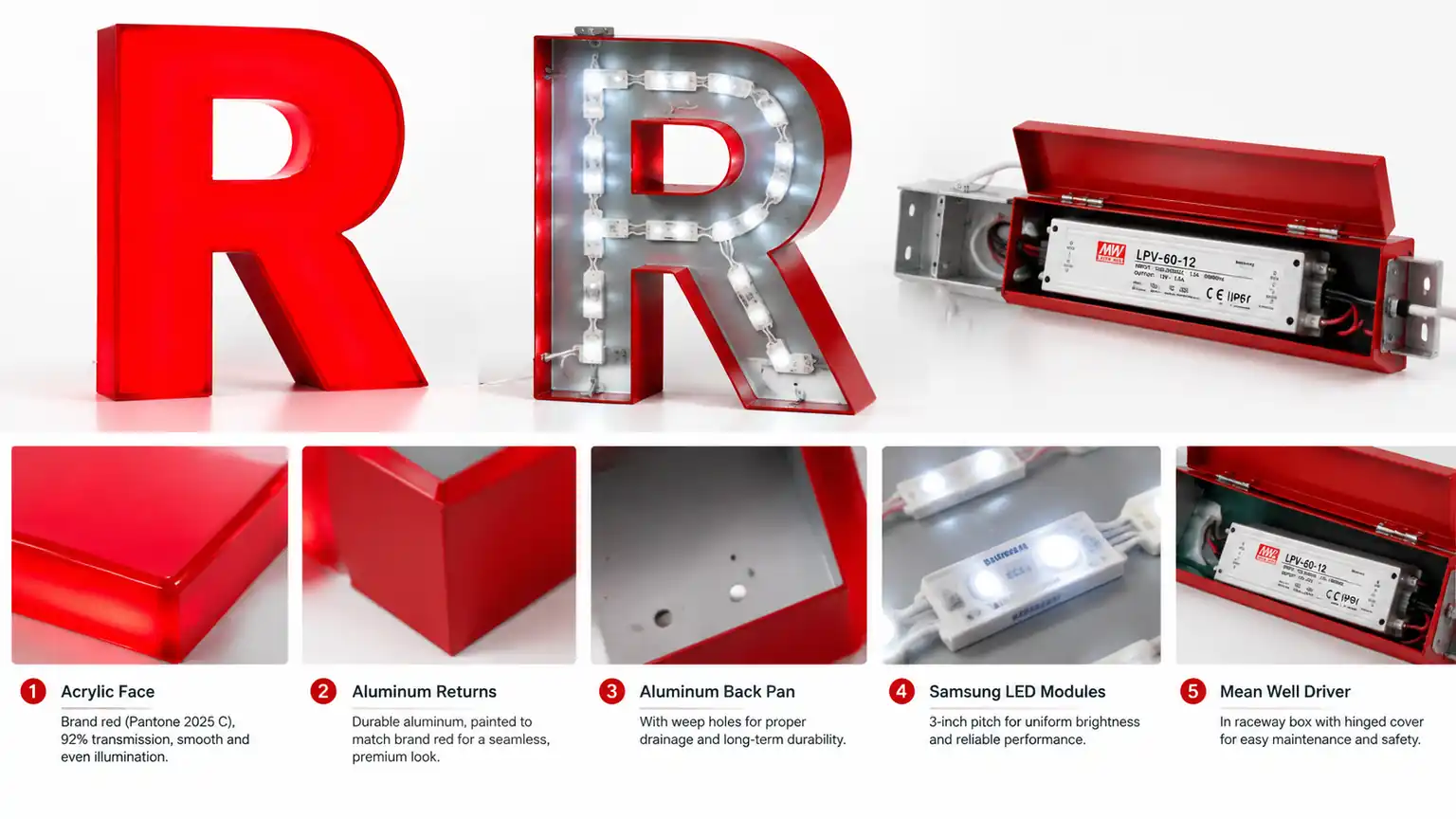
Neon never dies quietly. It flickers through a winter, hums loud enough to hear from the sidewalk, burns out one segment in February, and then costs $400 to refill a glass tube that has been obsolete for fifteen years. Meanwhile the aluminum returns — the box the sign is built from — are still square, straight, and bolted to a wall that has not moved an inch.
That gap between a dead light source and a healthy chassis is the entire business case for retrofit channel letters. You are not buying a new sign. You are replacing the part that failed, keeping the part that still works, and cutting the operating cost by 80–90% in the process. On a typical storefront it is a $4,000–$8,000 decision that pays back in six to eighteen months. If you are deciding whether to replace an old storefront sign or relight it, this guide is the framework.
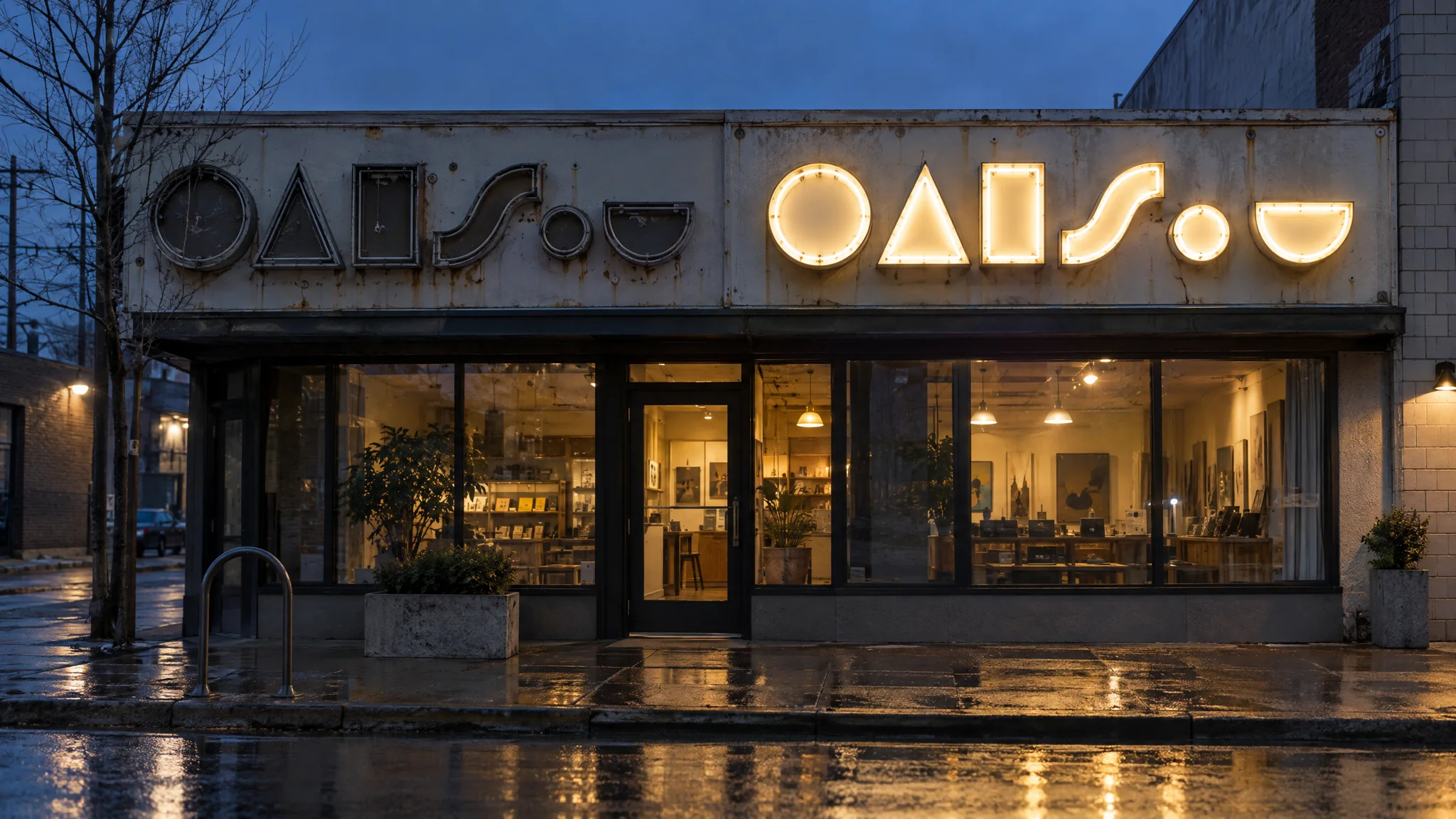
The $15,000 Neon Sign That Costs $3,000 a Year to Run — and the 18-Month Payback
A 60-foot neon storefront package — say 40 letters plus a logo — typically draws 30–50 watts per linear foot. Run it twelve hours a day, 365 days a year, and you are looking at 1,800–3,000 watts of continuous load: roughly 8,000–13,000 kWh annually. At the US commercial average of about $0.14/kWh, that is $1,100–$1,800 in electricity alone before a single tube fails.
The electricity is only half the bill. Neon is glass at 120 volts, and glass breaks. Transformers hum until they die; tubes lose their gas charge and go pink at the ends. Service calls run $150–$300 just to get a truck on site, refills $300–$500 every two to three years, and a full re-pump of a large sign can exceed the cost of converting it. Across five years the “$15,000 sign” consumes another $10,000–$15,000 in power and maintenance.
LED channel letters change the arithmetic at every line item:
| Spec | Neon | LED channel letters |
|---|---|---|
| Voltage | 120V via transformer (or 12–15kV tube voltage) | 24V Class 2, constant current |
| Draw | 30–50 W per linear foot | 2–4 W per linear foot |
| Rated life | ~10,000 hours (often less outdoors) | 50,000+ hours to L70 |
| Failure mode | Glass breakage, gas loss, transformer death | Gradual lumen depreciation; module swap |
| Noise | Audible transformer hum | Silent, solid-state |
| Service | Tube bend + gas refill + reinstall | Magnet-mounted module replacement, minutes |
Run the same 60-foot storefront on LED modules at 2.5 W/ft for the same 4,380 annual hours and you land near 650 kWh — about $90 a year. The saving is not a rounding error. It is $1,000–$1,700 a year in electricity, plus $300–$800 a year in avoided service, plus the end of the “half the sign is out” look that costs you customers without ever appearing on an invoice. Against a typical $4,000–$8,000 retrofit — new modules, drivers, faces where needed, labor and disposal — payback lands between six and eighteen months. After that the sign is effectively free to operate for a decade. On smaller packages with a heavy service history we have seen paybacks under six months.
Retrofit vs New Build — Decision Framework
Retrofit is not always the right answer, and any fabricator who tells you it is has not looked at your returns. The decision comes down to eight factors. Work down this table before you request a quote — it will tell you which conversation you are actually having.
| Factor | Retrofit (keep returns) | New build (replace all) |
|---|---|---|
| Existing returns condition | Sound: no corrosion, straight, paint intact | Any condition — corroded, bent, oil-canned, wrong depth |
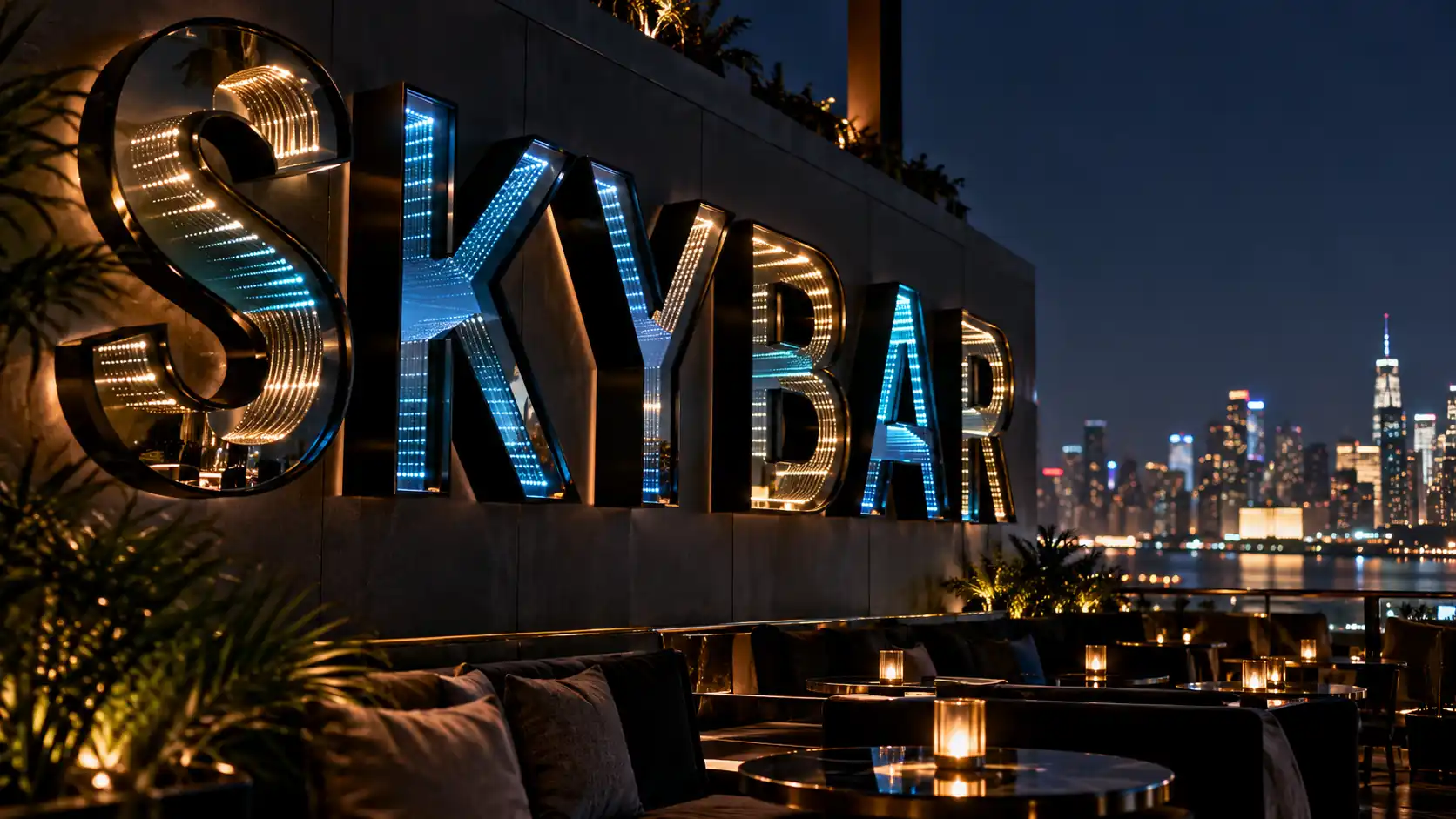
| Letter style match | Front-lit → LED front-lit; sometimes front-lit → face-halo if depth allows | Any line change: halo, face-halo, infinity mirror, dynamic |
| Mounting | Reuse existing raceway, standoffs and holes | New mount: raceway, flush, or wireway |
| Permit | Often “like-for-like” — simplified or over-the-counter | New permit, full drawings, sometimes structural review |
| Cost | 40–60% of new build | 100% (baseline) |
| Fabrication time | 3–7 days | 5–15 days |
| Warranty | 3-year LED modules and drivers | 5-year full system |
| Upgrade path | Limited — depth is fixed by the existing return | Full — any line, any depth, any trim |
Two variables decide most projects: return condition and return depth. Everything else is budget and patience.
When Retrofit Makes Sense
Roughly two out of three replacement enquiries we quote turn out to be a viable sign upgrade — keeping the chassis, changing the light. They share a profile:
- Returns are aluminum, .040″–.063″, and structurally sound. Aluminum does not rust the way steel does; it oxidizes, chalks, and holds its shape. A 20-year-old aluminum return is often straighter than a five-year-old steel one.
- The existing depth suits the target line. Front-lit needs 1.5″ minimum; face-halo about 2.5″; infinity mirror and deep face-halo 3″ or more. Measure inside face to back plate, not outside.
- The mount is reusable. A raceway that is solid, level and correctly flashed can stay; flush standoffs usually can too if the hole pattern is intact.
- Budget is roughly half of new build. If the retrofit quote exceeds 65% of a new sign, take the new build and its five-year full-system warranty. Retrofits fabricate in 3–7 days, so they also win when the timeline is tight.
- The sign is historic or character-defining. Original 1920s–1950s returns are often the reason a sign board approves anything at all. Keeping them is not just cheaper — it is frequently the only approvable path.
If that list describes your sign, the practical next question is which retrofit type you can afford. Start with the front-lit channel letters buyers guide if you are staying face-lit, or the face-halo and front-and-back explainer if you want rear glow.
When New Build Is Required
We turn down retrofits regularly. These are the conditions where a retrofit is either impossible, unsafe, or a false economy:
- Returns are corroded, bent or oil-canned. Patching a return costs more in labor than new returns, and still looks patched at night.
- Depth is wrong for the target line. A 3″ face-halo array will not work inside a 1.5″ return — the halo becomes a hot stripe against the wall. Infinity mirror is worse: it needs real optical distance between mirror, light and glass.
- Existing sign is non-compliant. Clearance over a sidewalk, wind load on a parapet, seismic bracing on a canopy — a like-for-like retrofit inherits the violation.
- The line, mount or brand is changing. A halo or infinity upgrade, a raceway-to-flush switch, or a new font and Pantone all invalidate the original geometry — that is a new build, not a retrofit.
- You want the 5-year full-system warranty. Retrofit warranties cover the modules and drivers we supply — not the 20-year-old return, face or wiring we did not.
Retrofit Types — What’s Actually Possible
Every channel letter retrofit falls into one of five levels, and each has a hard depth requirement. This table is the one to screenshot before you call anyone: it tells you what your existing sign can become.
| Retrofit type | What changes | Depth needed | Cost (per letter) | Fabrication |
|---|---|---|---|---|
| LED module swap | Neon or fluorescent tubes → LED modules inside the same returns | Existing ≥1.5″ | $800–$1,500 | 3–5 days |
| Face + LED swap | New acrylic face plus LED modules (color, brightness or minor size change) | Existing ≥1.5″ | $1,200–$2,000 | 5–7 days |
| Face-halo upgrade | Add rear LED array, deeper standoffs, often a new face | Existing ≥2.5″ | $2,000–$3,500 | 7–10 days |
| Dynamic upgrade | RGBW or addressable modules plus controller and data wiring | Existing ≥2″ | $2,500–$4,000 | 10–14 days |
| Full rebuild | New returns, back, face, LEDs and driver — a new sign | Any | New-build pricing | 5–15 days |
Per-letter pricing scales down with volume — a 40-letter package sits at the low end of each range, a four-letter boutique logo at the high end. The target line matters more than letter count: front-lit letters are cheapest, halo-lit letters add standoff and rear arrays, front-and-back lit signs double the LED count, and infinity mirror letters add optical-grade mirror and a much deeper box.
Neon-to-LED: The Most Common Retrofit
Roughly 70% of the retrofits we quote are neon-to-LED. Neon is the only illumination type where the light source is also the most fragile, the most expensive to service and the least efficient. Most LED sign conversion projects start here: replace neon with LED inside the existing returns, and the highest-return, lowest-risk upgrade a storefront can make is done.
The mechanical work is straightforward but not trivial:
- Strip the old system. Remove the glass, electrode boots and 120V transformer. On a large sign this is a licensed electrician’s job, and the old transformer is hazardous waste in some jurisdictions.
- Match the light path. Neon bends to a 0.5″ radius; LED modules need 1.5″–3″ of pitch, and the return depth must let that pitch sit behind the face without shadowing. Narrow or script returns often need custom 1.5″ mini-modules — or new returns bent to a wider radius.
- Replace the driver. A 24V constant-current driver goes where the neon transformer was, inside the raceway or in a remote enclosure. Ultra-slim Mean Well units (about 1.2″ tall) fit legacy raceways that a standard driver will not.
- Re-wire to Class 2. We pull new 24V conductors through the existing conduit when it is rated and intact; when it is not, new conduit. This is the step that most often adds an electrical permit.
- Keep or replace the face. Old acrylic yellows — a 15-year-old “white” face is closer to amber. Replacing it now costs little and resets the color match across the whole sign.
The result is not a neon look. It is a cleaner, more even face with no dark gaps between letters, no hum, and a service procedure that takes minutes instead of a truck roll. If you want to keep the neon aesthetic rather than the neon hardware, spectrum glow and neon-style LED letters reproduce the glow without the glass.
Code & Permit for Retrofits
Permitting is where retrofit projects are won or lost, and where the cost advantage is largest. A true like-for-like retrofit — same mount, same holes, same sign area, same circuit — is often handled as an over-the-counter electrical permit or a minor sign amendment. A new build requires full sign drawings, wind-load calculations and a plan review.
| Scope of change | Typical permit path | What we supply |
|---|---|---|
| Modules and drivers only, same face, same mount | Like-for-like electrical; often over-the-counter | UL 8750 module cut sheets, driver specs, load calculation |
| New face, same returns | Minor sign amendment | Face color/transmission spec, illumination letter |
| Mount change (raceway ↔ flush) | New sign permit, structural review | Stamped attachment details, wind-load calc |
| Circuit change (120V → 24V Class 2) | Electrical permit, inspection | Class 2 compliance letter, NEC 600 references |
| Historic district | Design review + sign permit | Photometric comparison, “returns preserved” statement |
Two code points come up constantly. NEC Article 600 governs sign illumination and requires listed components and accessible disconnects — a retrofit is not exempt. And most authorities having jurisdiction care about brightness and sign area, not light source: converting at equal or lower luminance is usually treated as maintenance, while a brighter sign is treated as a new sign. That is why we document luminance before and after.
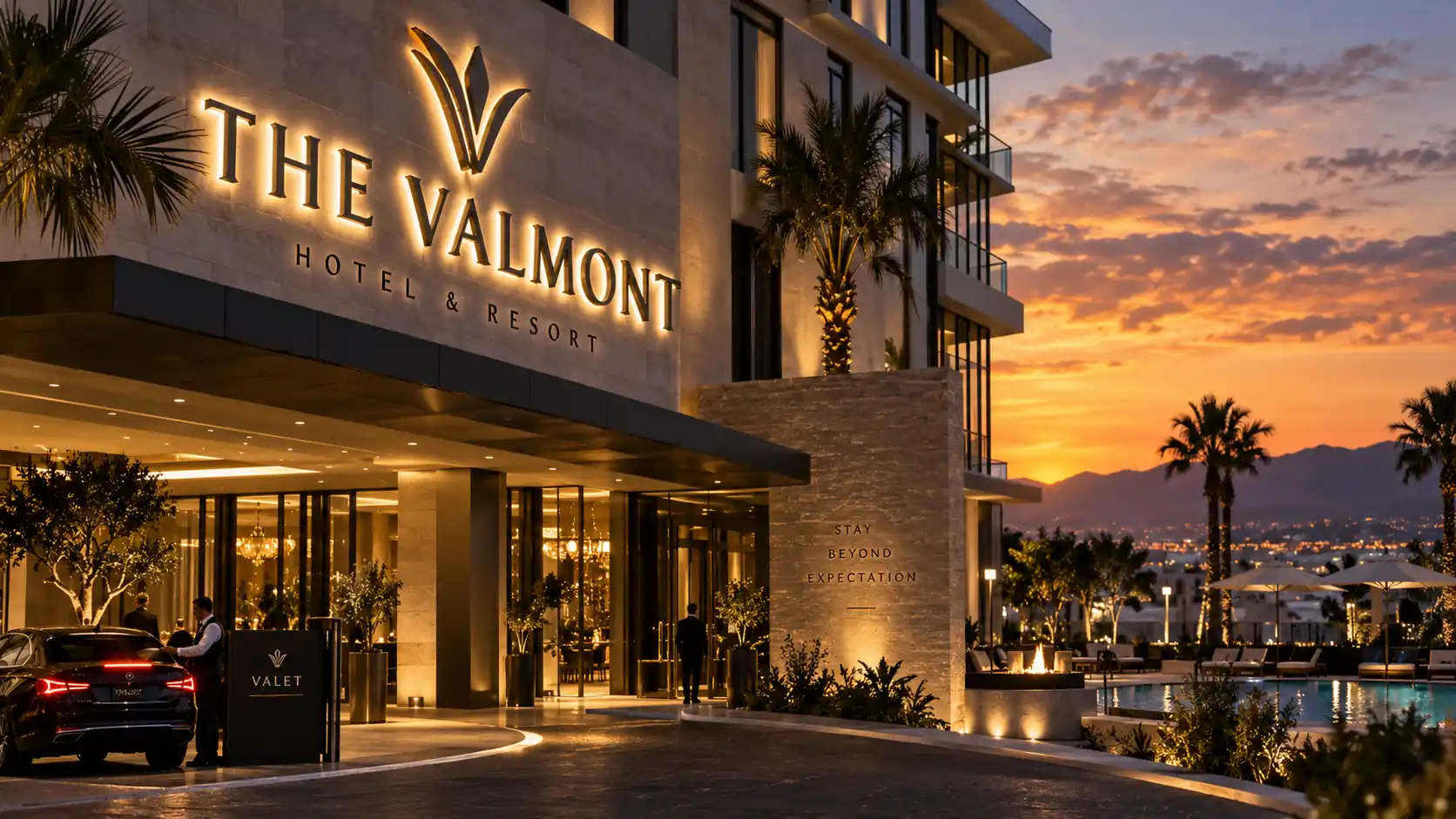
In historic districts, retrofit is frequently the only approvable path: boards reject new packages that alter letter proportions or mounting, and approve conversions that keep the original returns and relight them. See our hospitality signage guide, where facade review is the norm.
Energy Savings Math (Real Numbers)
Here is the same calculation we run for clients, at the US commercial average of $0.14/kWh and 12 hours of daily operation. Neon and old fluorescent figures assume 30 W/ft; LED assumes 3.6 W/ft including driver losses.
| Sign size | Neon / old fluorescent kWh/yr | LED kWh/yr | Annual saving | CO₂ avoided |
|---|---|---|---|---|
| 24″ × 8 ft, single face | 4,380 | 525 | $540 | 3.4 tons |
| 36″ × 12 ft, raceway | 8,760 | 1,050 | $1,080 | 6.8 tons |
| 48″ × 20 ft, multi-face | 17,520 | 2,100 | $2,160 | 13.6 tons |
Then add maintenance. A neon sign over 20 feet typically needs a service call every two to three years at $300–$500, plus a transformer every seven to ten years. LED modules are rated 50,000 hours — about eleven years at twelve hours a day — and a failed module is a $15 part swapped from a ladder in ten minutes. For five years after a retrofit, planned maintenance is effectively zero.
Common Retrofit Pitfalls (And How We Avoid Them)
Most retrofit failures are decided before fabrication starts, in the measurement. The six we see most often, and the fix for each:
- ❌ LED pitch too wide for a narrow return. Standard 3″ pitch modules shadow the face on a 1.5″ return. ✅ We specify 1.5″ mini-modules, or re-bend the return to a workable radius.
- ❌ Driver will not fit in the old raceway. The most common cause of a “retrofit” turning into a surface-mounted box on the wall. ✅ We measure the raceway interior and specify an ultra-slim 1.2″ driver, or move the driver to a remote enclosure.
- ❌ Existing holes do not match the new pattern. New standoffs, new module rails, new back panel: none of them line up with 20-year-old holes. ✅ We drill and tap new positions, or fabricate adapter plates that use the original anchors.
- ❌ Old wiring is not rated for the new circuit. Reusing undersized or degraded conductors on a 24V Class 2 run causes voltage drop and premature driver failure. ✅ We pull new THHN through the existing conduit and verify voltage at the last module.
- ❌ Face color drift. A new white LED behind a 15-year-old yellowed face reads cream, then tan. ✅ Face replacement is included in the face + LED swap, and we send a color chip for approval.
- ❌ Halo upgrade on a return that is too shallow. The light has nowhere to bounce; you get a hot line instead of a glow. ✅ We say no at quote stage and price a new build instead of selling you a disappointment.
Case Studies — Real Retrofit ROI
Four representative retrofit patterns from our production queue, anonymized and rounded. The numbers come from actual quotes and client-reported utility savings, not marketing projections.
1. Regional coffee chain, 50 locations — neon to front-lit LED. Every store carried a 1970s neon package: 22–30 letters per facade, 120V transformers inside the wall, constant service calls. We standardized a front-lit LED module kit that reused all 50 sets of returns and mounting holes. Program cost: about $180,000, or $3,600 per store. Reported energy and maintenance savings: $92,000 a year across the fleet — a 23-month payback — with one service procedure instead of fifty. If your rollout looks like this, read the coffee shop and cafe channel letter guide first.
2. Historic hotel, Charleston — front-lit to face-halo, returns preserved. The 1920s returns were the reason the facade was protected, so replacement was never on the table. We added a rear LED array, deeper standoffs and a new acrylic face inside the original boxes, then documented photometric output against the existing neon. The board approved on the “returns preserved, luminance reduced” argument: $28,000, 85% energy reduction, seven weeks of review.
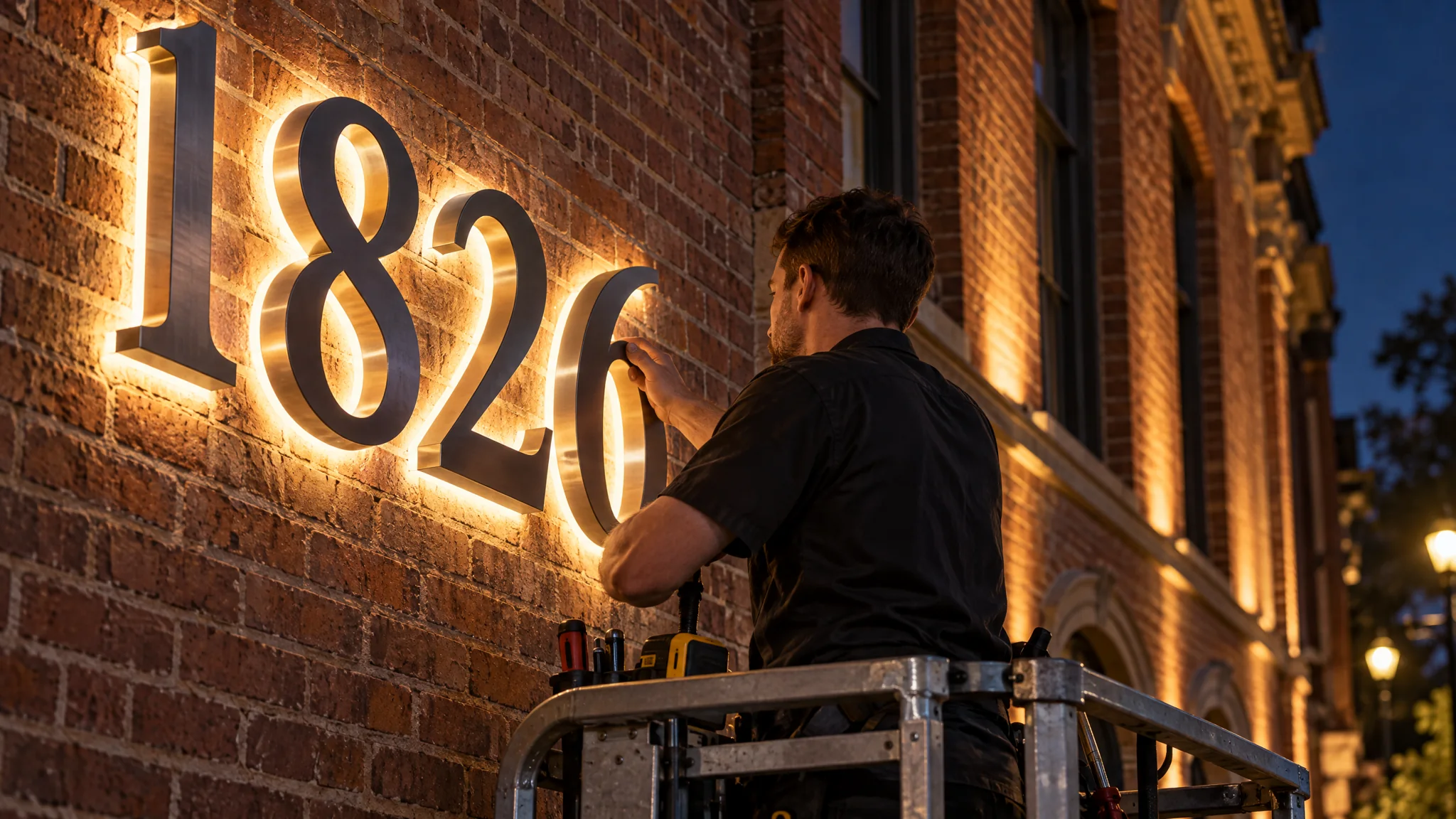
3. Gas station rebrand — retrofit declined, new build delivered. The client wanted an 80s front-lit package converted to a modern face-halo look. The survey found pitted returns, three oil-canned letters and 1.25″ depth. We quoted a new build at $42,000 instead of a retrofit we could not warranty, with a three-week permit cycle. Result: 40% higher face luminance at 70% lower energy than the original fluorescent package.
4. Fitness studio — static front-lit to dynamic luminous, returns reused. A 1.5″ return with sound mounting was ideal for an RGBW module swap plus a controller. The studio runs class-status colors synced to its booking API: green for open spots, amber for almost full, red for waitlist. Project: $18,000. Client-reported drop-in attendance rose 18% in the first quarter — the retrofit paid back on revenue before it paid back on energy. The control architecture is covered in our dynamic luminous guide.
Your Retrofit Assessment Checklist (Send Us Photos)
We can return a verdict, a recommended line and a budget range within 24 hours — if we get the right information. Fill this in, and photograph each letter group straight on plus one shot from each side to show depth.
[ ] Return material: aluminum / steel / other
[ ] Return condition: straight / bent / corroded / paint peeling
[ ] Return depth: ______ inches (measure inside face to back plate)
[ ] Current illumination: neon / fluorescent / front-lit LED / other
[ ] Mount type: raceway / flush / direct / unknown
[ ] Mount condition: solid / loose / rusted
[ ] Electrical: 120V transformer location / 24V driver location
[ ] Conduit: accessible / buried / unknown
[ ] Permit history: original permit # / last inspection date
[ ] Target line: front-lit / halo / face-halo / infinity / dynamic
[ ] Brand changes: new font / new size / new Pantone / same
[ ] Timeline: need by ______ / flexible
[ ] Budget: retrofit range / new build range / decide after quote
Three items matter most: depth decides which lines are possible, return condition decides whether a retrofit can be warranted, and target line decides whether this is a module swap or a rebuild.
From Assessment to Install
- Send photos and the checklist. We reply within 24 hours with feasibility, a recommended line and a budget range — including a straight “no, this needs a new build” when that is the honest answer.
- Site survey, if complex. A technician measures depth at several points, tests the circuit and photographs the raceway interior. Historic and multi-tenant facades almost always need this step.
- Fabrication. Three to fifteen days by retrofit type. Faces and modules are bench-tested together before crating, so the color match is verified under power.
- Installation. Typically one day, because the anchors, holes and flashing already exist — the crew swaps components instead of rebuilding an attachment.
- Commissioning. Timer and dimmer programmed, luminance documented against the pre-retrofit reading, serials recorded for warranty. You get a closeout pack with permit documents, photometric readings and warranty terms.
Weighing a retrofit against a replacement right now? Send us photos and the checklist and we will tell you which of the five retrofit types your sign supports — or that it is time for a new one. Either way, you will know before you spend anything.
Related reading: infinity mirror channel letters: depth, drama and ROI for projects where a retrofit is not the answer, and front-and-back lit signage for facades that need symmetry from every angle.