Your coffee sign is usually the first impression a customer forms before they even search for you online, and the most-viewed piece of marketing you own. Yet many owners treat it as an afterthought or inherit a sign never designed for their concept. This guide walks through the five channel letter styles, how to match the right one to your cuisine, what compliance requires, and how a new sign converts into revenue — written for restaurant and food business owners from a single site to a growing chain.
Why Your Coffee Sign Is Your #1 Marketing Asset
Foot-traffic math is unforgiving: 68% of walk-ins decide at the storefront. For a coffee shop averaging $6–$8 per ticket, one extra customer per hour during peak (7–9 AM, 2–4 PM) equals $1,200–$1,600 monthly revenue per location. Multiply that across 5, 10, or 50 sites and the sign pays for itself in weeks, not years.
Day versus night matters uniquely for coffee. The 7 AM rush needs crisp, legible lettering readable at 40 mph. The 2 PM study crowd needs warmth that says “stay awhile.” A single illumination style rarely nails both — which is why the style choice is a business decision, not an aesthetic afterthought.
Brand consistency across locations compounds. A customer who recognizes your halo-lit script in Portland and sees the same face-halo glow in Denver knows exactly what to expect. That recognition drives direct visits over third-party delivery apps, saving 15–30% per order in commission fees.
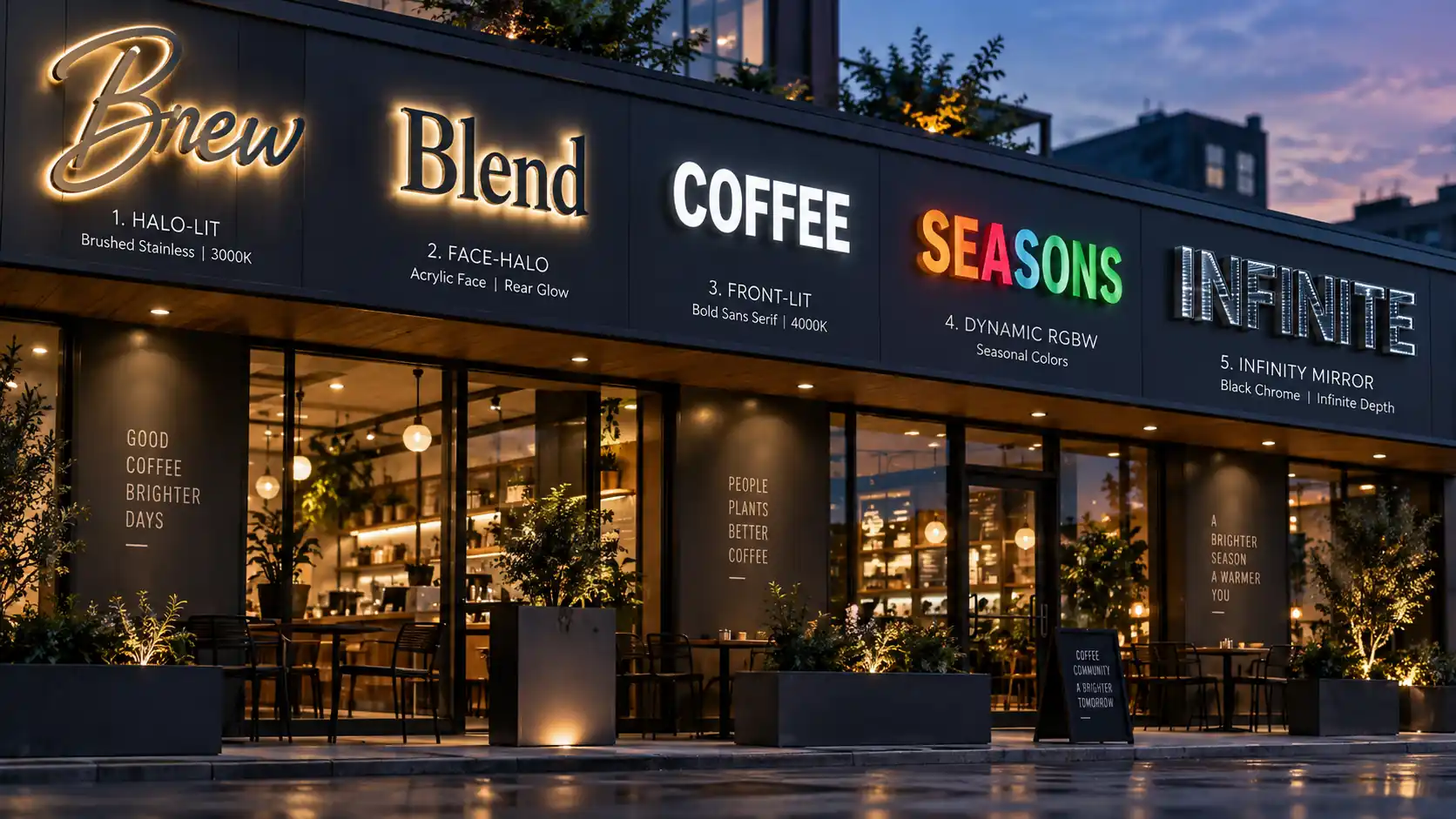
Five Channel Letter Styles That Fit Coffee & Cafe Brands
Halo-Lit Script — Artisan, Third-Wave, “Hand-Crafted” Vibe
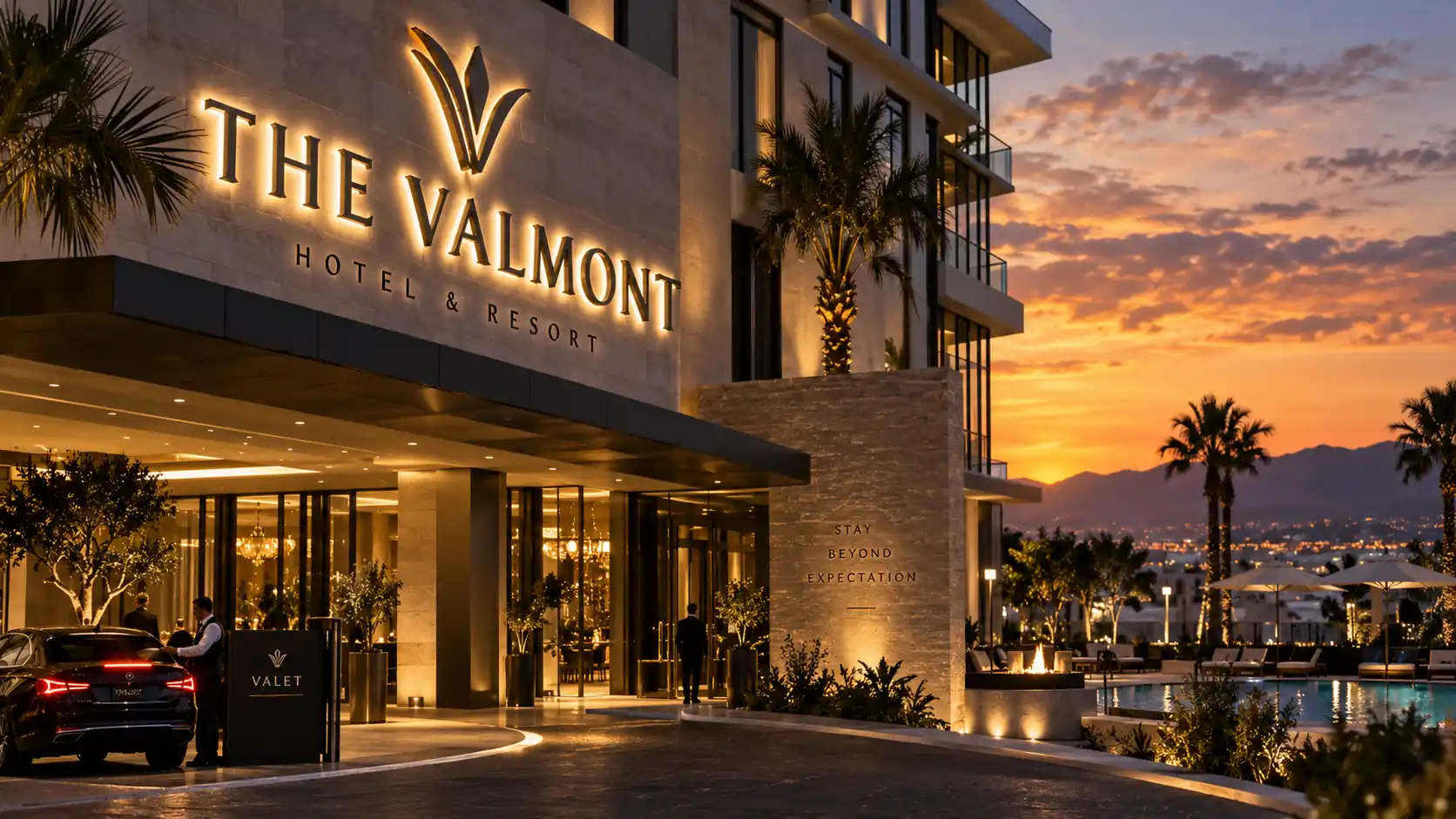
Halo-lit (reverse-lit) letters mount away from the wall, casting a soft glow behind each character. The face is opaque (typically brushed stainless, aluminum, or painted), so light escapes only from the rear edge. The result: a warm, floating silhouette that reads “premium” and “intentional” — exactly the associations specialty roasters and pour-over bars want.
Best for: single-origin cafes, micro-roasters, bakery-cafe hybrids where the brand voice is craft-first. The script font reinforces the hand-written, small-batch narrative.
See: halo-lit channel letters — available in front-lit, halo-lit, and face-halo configurations.
Face-Halo / Front-and-Back Lit — Premium, Visible From All Angles
Face-halo (also called front-and-back lit) illuminates both the letter face and the rear halo simultaneously. Two LED arrays — one forward, one backward — create depth day and night. From the street you get clean face luminance; from the patio, alley, or side approach you get the warm halo glow. No dead angles.
Best for: corner locations, cafes with sidewalk seating on two sides, brands that want “flagship” presence without the scale of a big-box sign. The dual glow reads upscale but approachable.
See: front-and-back lit channel letters.
Front-Lit Bold Sans — High-Volume, Drive-Thru, Chain-Ready
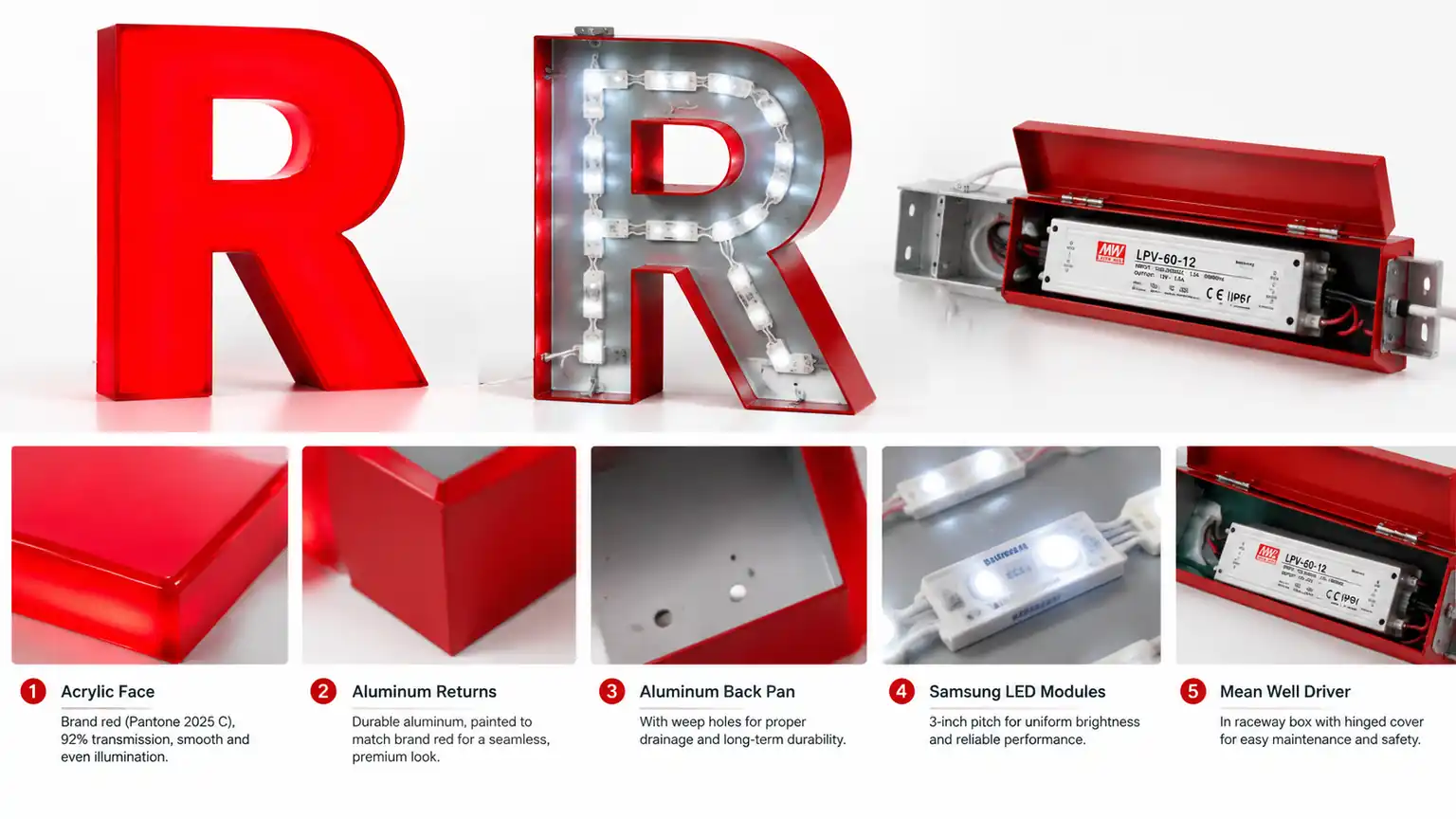
Front-lit (face-lit) is the workhorse: acrylic face, LED inside, light emits forward only. Maximum day/night legibility, simplest fabrication, lowest cost per square foot. Raceway mounting hides the power supply and wiring in a painted aluminum box behind the letters — landlord-friendly, code-compliant, fast to install.
Best for: drive-thru coffee, multi-unit chains, locations where 40 mph readability is non-negotiable. The bold sans font scales cleanly from 18″ to 48″ cap height.
See: front-lit channel letters.
Dynamic Luminous — Color-Shift for Seasonal Drinks, Happy Hour
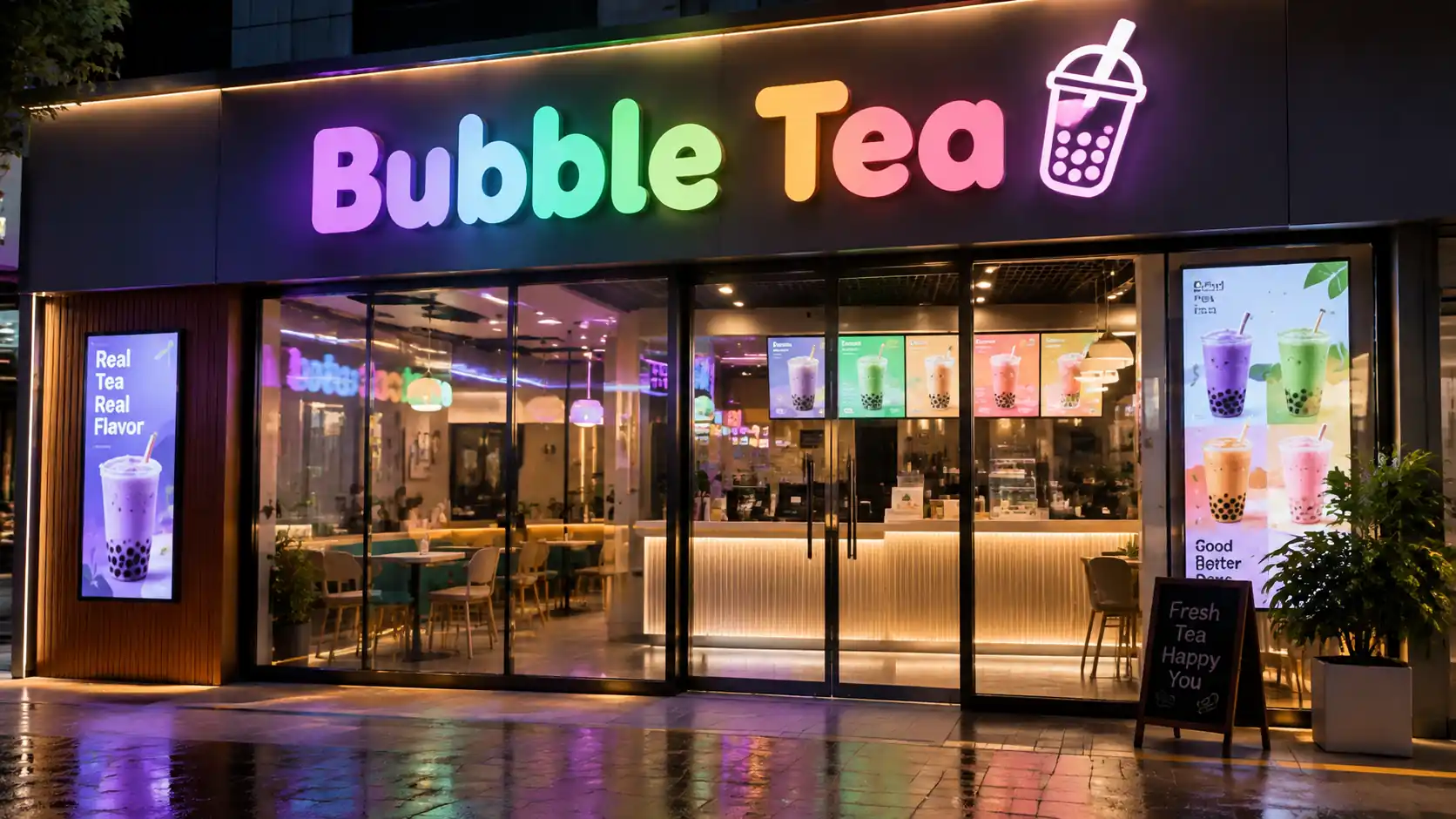
Dynamic luminous (programmable RGBW) lets you change color, intensity, and animation via DMX or wireless control. Pumpkin spice orange in October, peppermint red in December, matcha green for spring — the sign becomes a living menu board. Synchronize with POS promotions: “Happy Hour 2–5 PM” triggers a warm amber glow automatically.
Best for: bubble tea, dessert cafes, milk tea shops targeting Gen-Z shareability. The sign itself generates UGC — customers post the color changes, you get free reach.
See: dynamic luminous signs.
Infinity Mirror — Instagram Bait, Nightlife-Adjacent Cafes
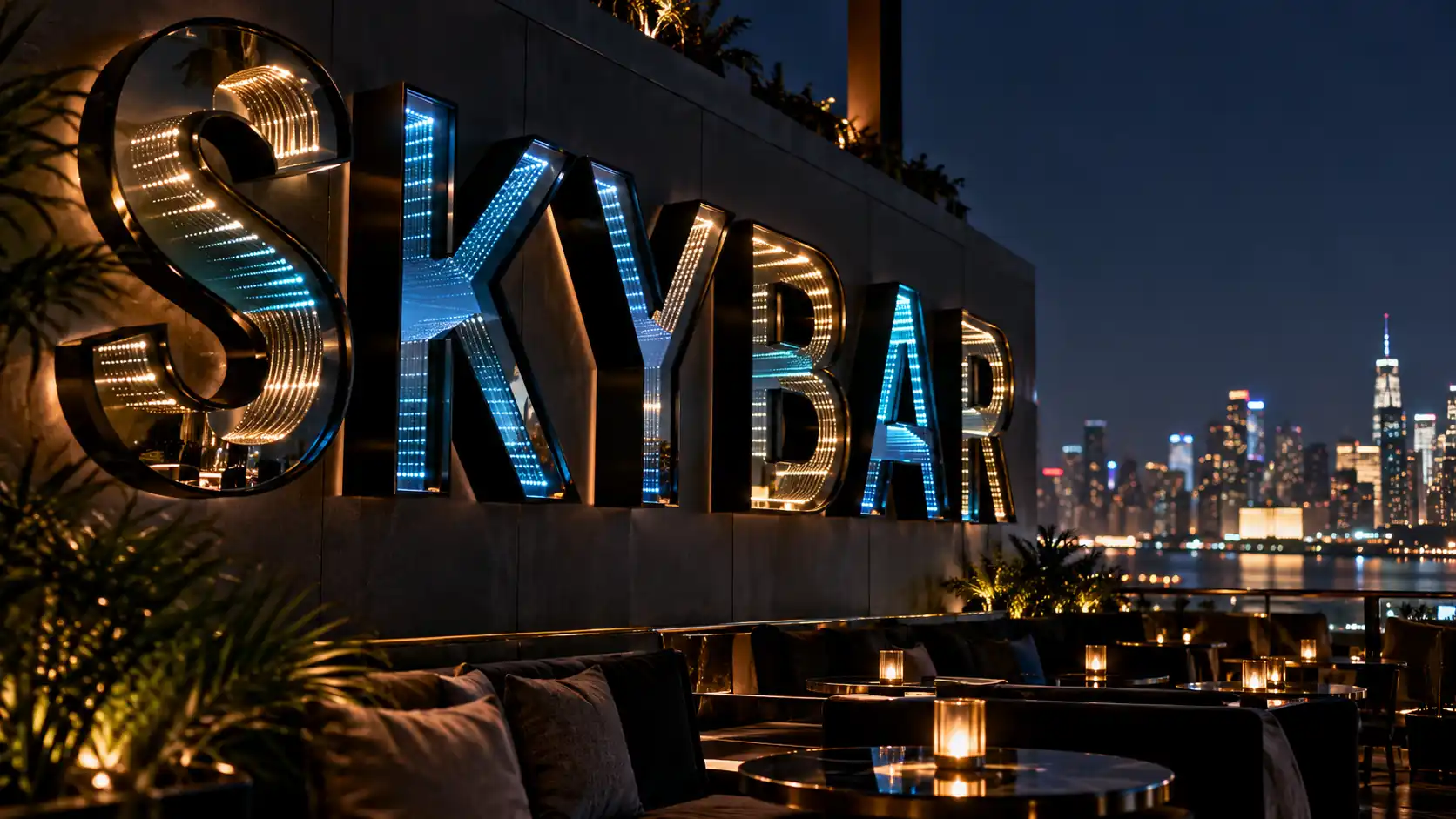
Infinity mirror letters use a front mirror, rear LED array, and a partially reflective rear panel to create the illusion of infinite depth. The effect is hypnotic at night — a tunnel of light inside each character. Daytime they read as clean metallic faces; nighttime they become a destination.
Best for: late-night cafes, coffee-bar hybrids, concepts near entertainment districts where “vibe” drives foot traffic. The mirror finish (brushed stainless, black chrome, rose gold) doubles as a design statement in daylight.
See: infinity mirror channel letters.
Matching Style to Concept — Decision Matrix
| Concept | Best Line | Why |
|---|---|---|
| Artisan roaster / pour-over bar | Halo-lit script | Warmth, craft perception, premium positioning |
| Bakery + cafe hybrid | Face-halo | Day legibility + night glow, visible from patio & street |
| Bubble tea / dessert | Dynamic luminous | Color matches menu, Gen-Z shareability, promotional sync |
| Fast-casual coffee chain | Front-lit raceway | Consistency, code-compliant, scalable across 50+ sites |
| Late-night cafe / bar hybrid | Infinity mirror | Nightlife energy, social proof, destination appeal |
Compliance & Code for Food-Service Signage
Health-department clearance is the first hurdle: your sign cannot obstruct vent hoods, makeup air intakes, or fire suppression lines. We coordinate with your MEP engineer before fabrication.
Drive-thru lane installations trigger DOT setback requirements and luminance caps (typically 500 nits night, 1,500 nits day). Raceway mounting with a dimmable driver solves both — the same sign runs bright for highway visibility at noon, dims to neighbor-friendly levels at midnight.
Historic districts and HOAs often restrict illumination to halo-lit only — no face glow, no raceway visible. Halo-lit script is frequently the only approved style in these zones. We’ve navigated design review boards in Charleston, Savannah, Portland, and dozens of historic Main Streets.
UL/ETL listing is non-negotiable for insurance and permitting. Every Y SIGNS channel letter ships with a UL/ETL label on the raceway or letter back — factory-wired, field-ready, inspection-passing.
Sizing for Coffee Storefronts
Standard 18–24″ cap height works for 20–40 ft setback (typical strip mall). For standalone buildings at 50–80 ft, step to 30–36″. The rule of thumb: 1 inch of cap height per 2–3 feet of viewing distance.
Blade sign + channel letters = 2.3× recall (see our Channel Letter Size Guide). On narrow cafe fronts (<20 ft wide), a perpendicular blade sign is mandatory for cross-traffic visibility.
Multi-line layouts follow the golden ratio: primary brand 28″ / descriptor 18″ (e.g., “BLUE BOTTLE” / “COFFEE ROASTERS”). Line spacing = 0.618 × cap height. We engineer the kerning and leading per font — no guesswork.
Color Temperature & Brand Palette
LED color temperature shapes perceived brand temperature:
- 2700 K–3000 K: specialty coffee, bakery — warm, appetizing, “stay awhile”
- 4000 K: modern minimalist, chain — clean, trustworthy, clinical-but-not-cold
- RGB dynamic: milk tea, dessert — menu-synced promos, seasonal campaigns
Pantone matching: your logo brown #4B2E1E → we bin LEDs to ±2 SDCM so every location glows the same hue. Multi-site rollouts (10+ locations) get a master color bin reserved for your brand.
Mounting: Raceway vs Flush vs Blade Combo
Raceway: fastest install, hides power supply, landlord-preferred (minimal facade penetration). Painted to match facade or letter return. Standard for strip-mall, multi-tenant, and chain rollouts.
Flush mount: cleanest facade, letters mount directly to wall with threaded standoffs. Requires 3″ return depth + remote driver box (typically in soffit or above ceiling). Best for flagship, historic, or architect-driven projects where the raceway visual is unacceptable.
Blade + channel combo: max visibility on narrow fronts. Blade sign perpendicular to traffic, channel letters parallel. Two permits, one install crew, unified brand.
Budget Ranges (Factory-Direct, 2026 USD)
| Style | 24″ Cap Height Range | Notes |
|---|---|---|
| Halo-lit script | $1,800–$2,600 | Brushed SS face, 1.5″ standoff |
| Face-halo | $2,200–$3,200 | Dual LED arrays, acrylic face |
| Front-lit raceway | $1,200–$1,800 | Most cost-effective, fastest lead time |
| Dynamic luminous | $2,800–$4,200 | RGBW, DMX/wireless controller included |
| Infinity mirror | $3,500–$5,000 | Mirror finish, engineered depth |
MOQ 1 unit. 5–15 working days production. Ships US/EU/AU/UK/CA with plug-and-play wiring.
Case Snapshots (Y SIGNS Portfolio)
- Coffee Shop Halo-Lit Channel Letters — artisan roaster, 24″ script, 3000 K halo
- Bakery Face-Halo Channel Letters — hybrid bakery-cafe, 30″ face-halo, 4000 K
- Milk Tea Dynamic Luminous Sign — bubble tea, 28″ dynamic, seasonal color programs
- Fast Food Front-Lit Channel Letters — drive-thru chain, 36″ raceway, 5000 K
Next Steps: From Quote to Install
- Logo readiness — run our Logo Prep Checklist (vector, outlined fonts, Pantone specs).
- Permit timeline — 2–6 weeks typical for coffee/food service; historic districts add 2–4 weeks.
- Install — 1 day, licensed electrician required. We provide stamped drawings, UL file, and wind-load calcs for permit package.
- Timer/dimmer — auto-on 5:30 AM, dim 10 PM (neighbor-friendly, code-compliant).
Ready to spec your coffee sign? Browse all channel letter lines or request a quote with your logo and storefront photos — we’ll return a rendered mockup and line recommendation within 24 hours.