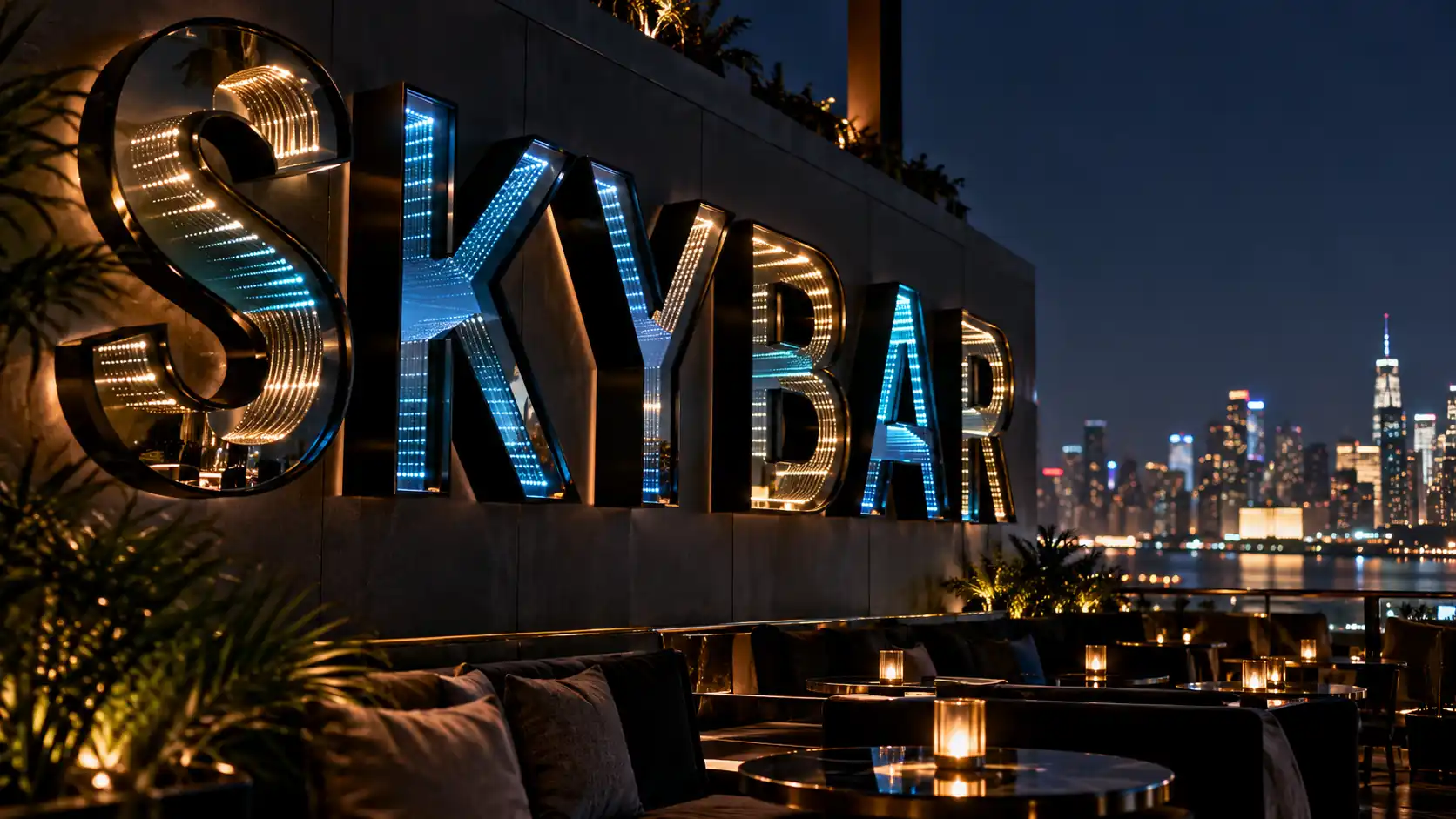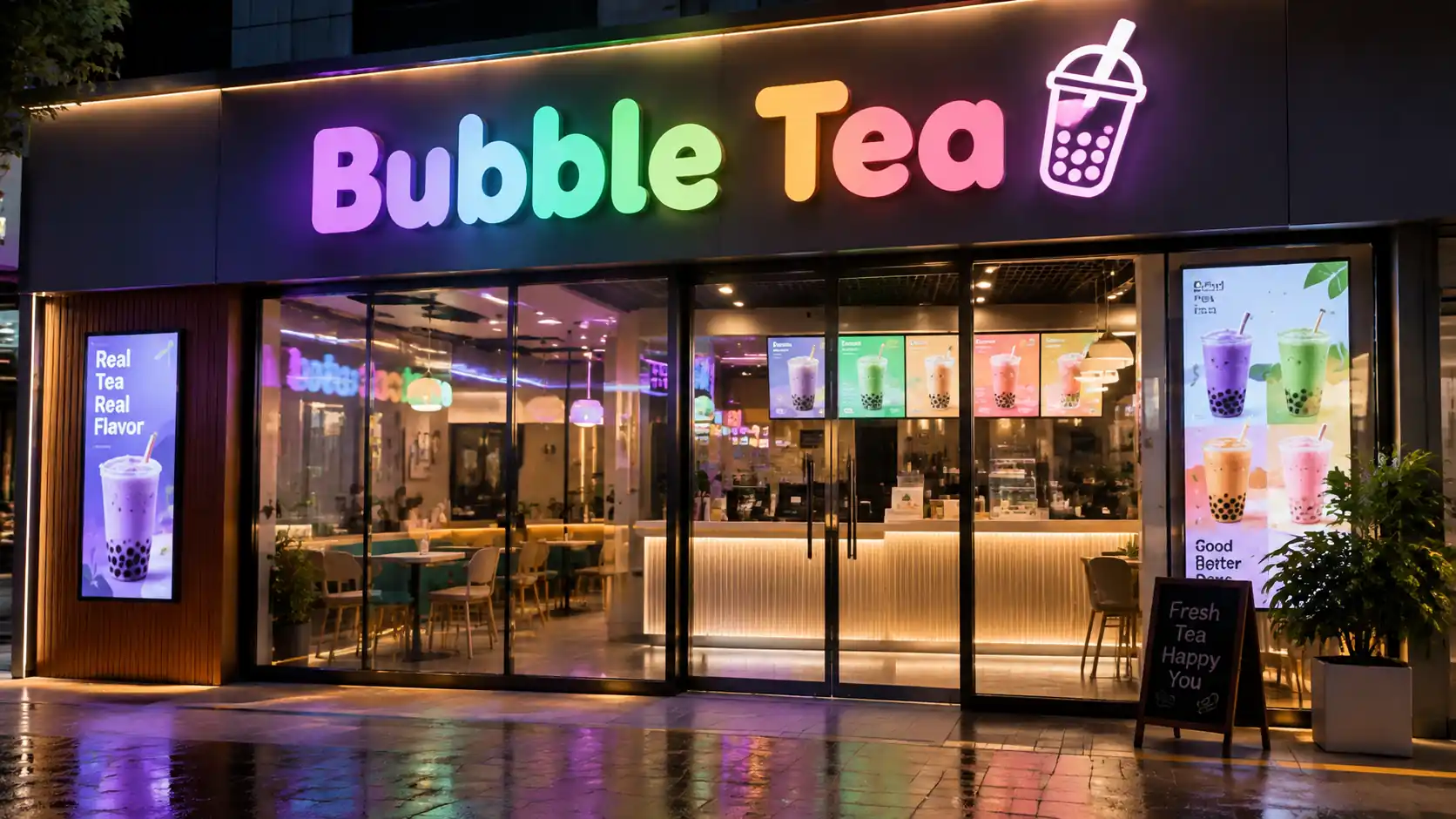
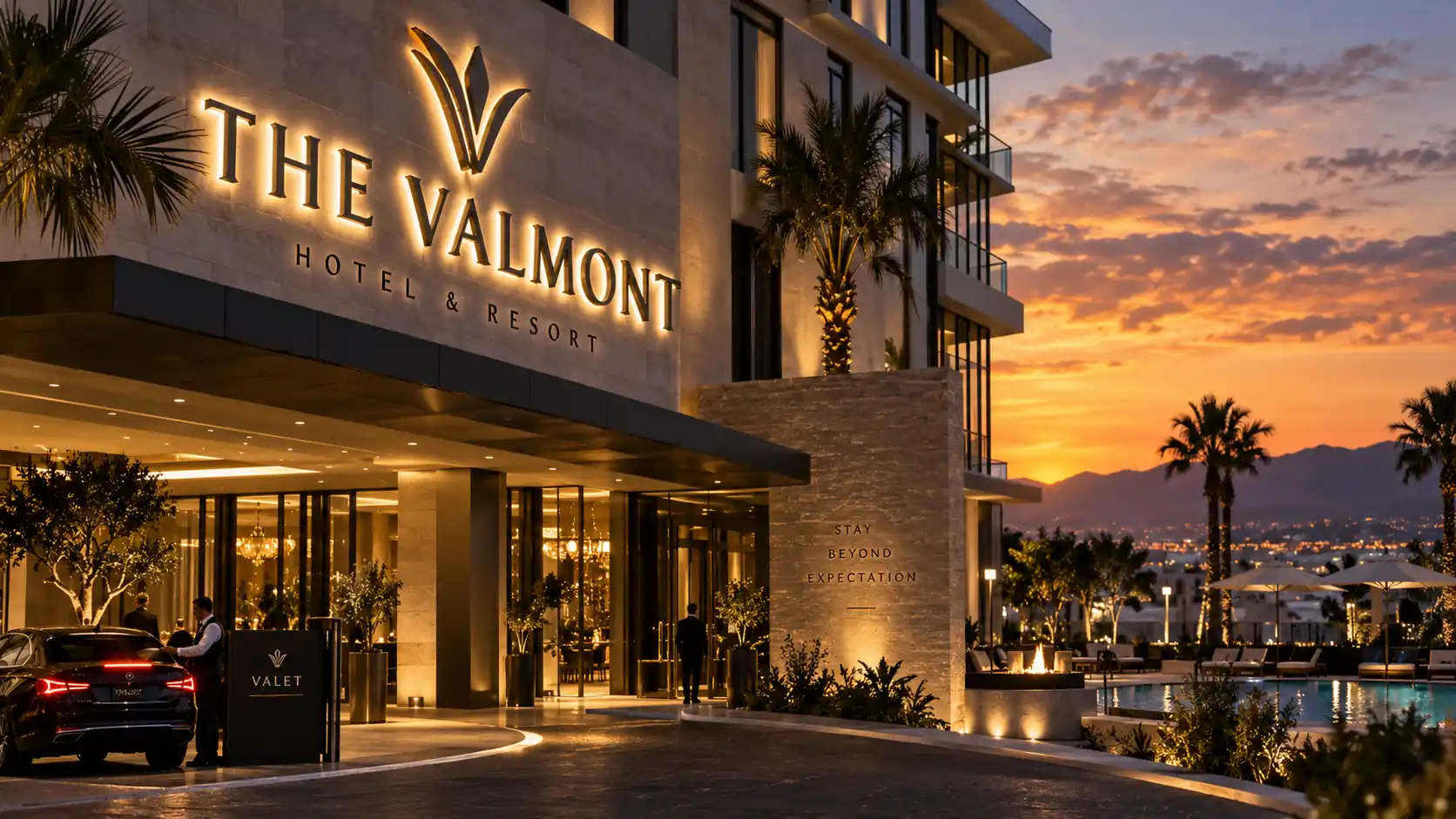
Face-halo (front-and-back lit) channel letters are the “best of both worlds” — crisp face readability by day, dimensional halo depth by night, from a single letter with dual LED arrays. At 30–50% premium over front-lit, they’re the premium differentiator for brands that need visibility from every angle: street, alley, patio, valet, rooftop. This guide covers the physics, the specs, the code nuances, and the ROI case.
What Is Face-Halo? The “Best of Both Worlds” Illumination
Face-halo letters run two independent LED arrays simultaneously: a forward-facing array illuminating the acrylic face, and a rear-facing array casting a halo glow against the mounting surface. One letter, two light engines, single power feed, unified control.
Face-halo vs Front-and-Back Lit — same physics, different emphasis:
- Face-halo: face dominant (70% output), halo accent (30%) — brand readability first, warmth second
- Front-and-back: equal face/halo balance (50/50) — architectural symmetry, visible from all angles equally
Both use dual arrays; the ratio is programmable via driver channels. Most hospitality and retail clients choose face-halo; landmark and institutional projects often specify front-and-back for pure symmetry.
Anatomy of a Dual-Illuminated Letter
| Component | Spec | Dual-Array Difference |
|---|---|---|
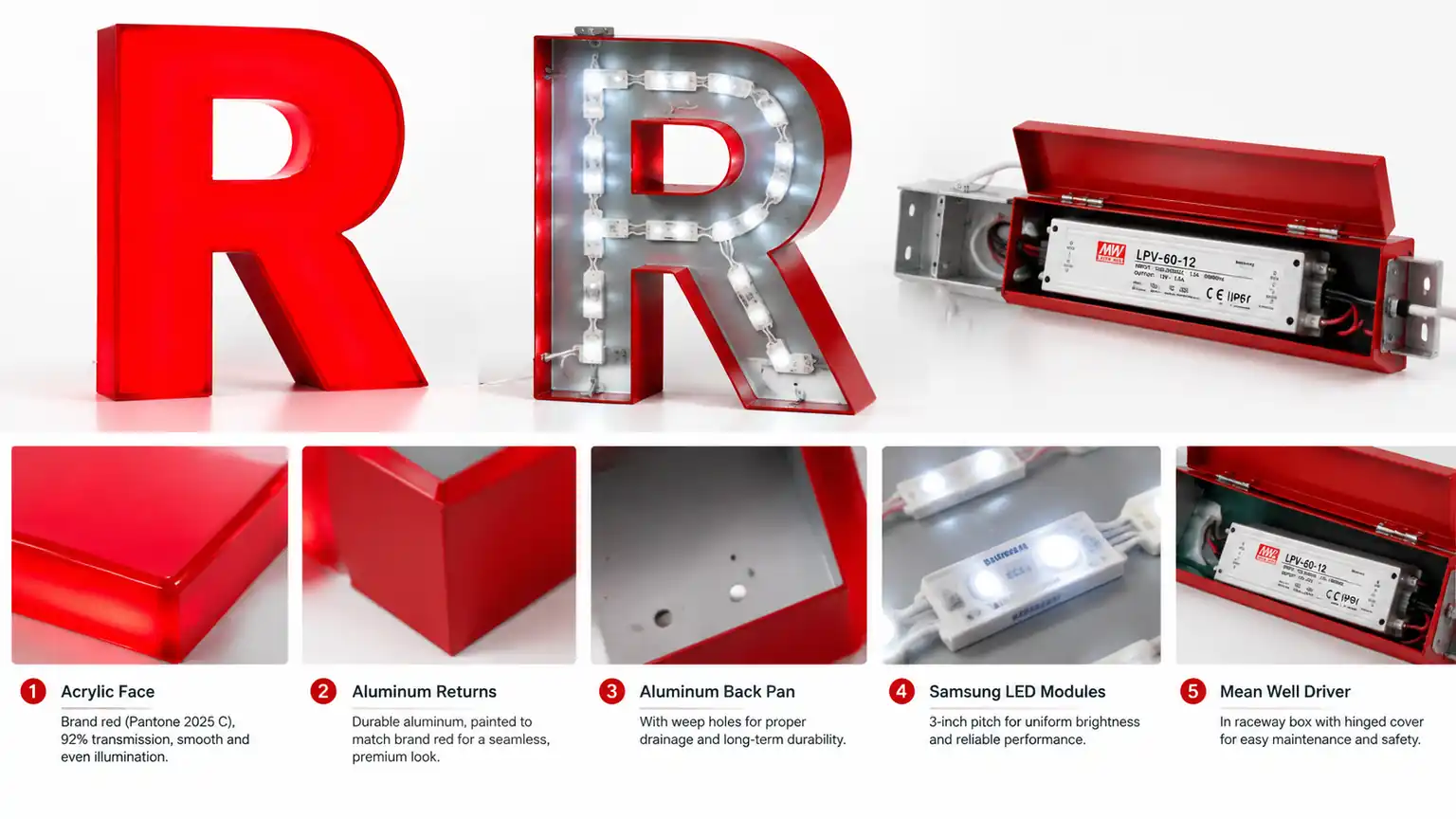
| Face | Translucent acrylic, color-matched, 92% transmission | Same as front-lit; color calibrated for both arrays |
| Return | .063″ aluminum, painted/anodized/brushed | Deeper (2–2.5″) for halo spread; standoff 1.5–2″ |
| Back | Aluminum pan with rear LED array + reflector | Second LED engine, sealed, weep holes |
| LED (face) | Samsung/LG modules, 3–4″ pitch | Independent channel 1 |
| LED (halo) | Samsung/LG modules, 3–4″ pitch | Independent channel 2 |
| Driver | Mean Well 24V dual-output (or two drivers) | Two-channel 0–10V / DMX / DALI |
| Control | Face/halo dim independently or linked | Scene presets: “Open” (100/30), “Late” (50/100), “Closed” (0/0) |
Why Dual Illumination Commands Premium Pricing
- 2× LED modules, 2× wiring, 2× QC — but single install, single permit, single sign
- Face-halo: 30–40% over front-lit. Front-and-back: 40–50% over front-lit.
- ROI math: 3× visibility angles (street + alley + patio) = more impressions per dollar. A hotel with face-halo on driveway + valet + patio captures 3 approach vectors vs 1.
- Architect/landlord preference: “looks finished from every angle” — faster approvals, fewer revisions.
Color Temperature Strategies for Dual Arrays
| Strategy | Face | Halo | Best For |
|---|---|---|---|
| Classic warm | 3000 K | 2700 K | Hospitality, wine bar, boutique — skin-flattering, intimate |
| Modern crisp | 4000 K | 3000 K | Medical, premium retail — clean day, warm night depth |
| Brand-matched | Brand white point | 2700 K | Multi-site rollouts — face = brand, halo = warmth |
| Dynamic halo | Fixed white | RGBW programmable | Face-halo + dynamic accent — events, seasons, campaigns |
Binning: ±2 SDCM per channel independently. Face channel and halo channel each get reserved bins for portfolio consistency.
Mounting for Dual Arrays
| Method | Driver Location | Pros | Cons |
|---|---|---|---|
| Raceway | Dual-channel driver in raceway box | Single conduit, fire-marshal preferred, accessible | Raceway visible (deeper: 5″×4″) |
| Flush mount | Remote driver box (soffit/attic) | Cleanest facade, architectural purity | Facade penetrations, driver access needed |
| Wireway | In wireway or remote | Slimmer than raceway, cleaner | Less driver space |
Standoff critical: 1.5–2″ for optimal halo spread. <1" = compressed halo; >2.5″ = diffused, low-contrast halo.
Sizing & Design Constraints
- Minimum stroke: 2″ (dual arrays need space) — narrow scripts need custom mini-modules
- Minimum cap height: 18″ (smaller = halo lost, face dominates)
- Maximum single-piece: 100″ (deeper return = heavier; spliced larger)
- Font weight: medium-bold optimal; ultra-bold = halo compressed, light = face weak
- Return finish: matte black = max halo contrast; brushed = subtle; white = max halo brightness
Code, UL & Permit Nuances
- NEC 600: two LED circuits = two branch circuits OR listed multi-output driver (we use listed dual-output Mean Well)
- Fire marshal: raceway with dual disconnect preferred — we include in raceway box
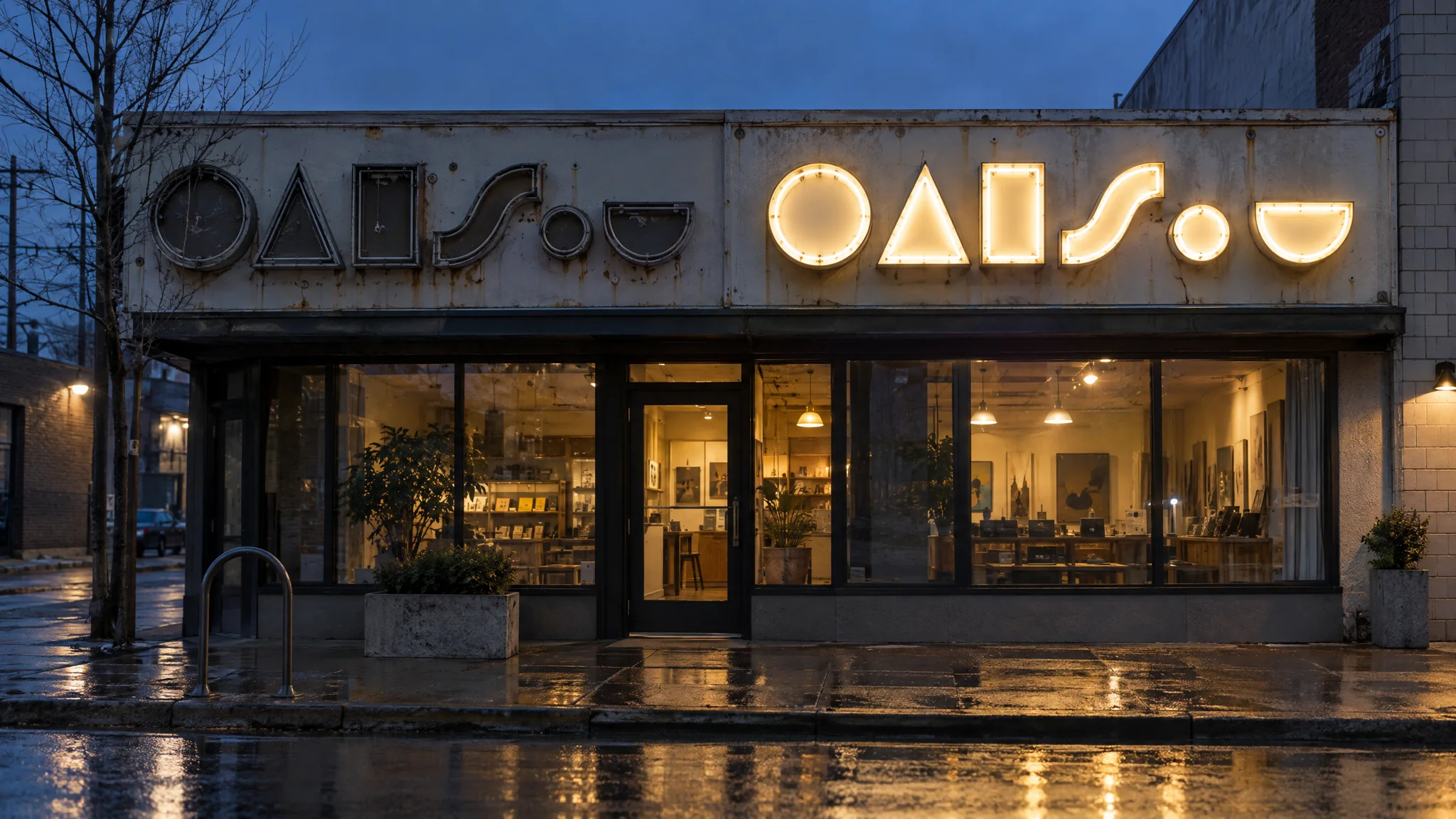
- Historic districts: face-halo often the ONLY approved illuminated style (controlled face glow + warm halo = “respectful illumination”)
- Energy codes (Title 24, IECC): dual arrays = higher wattage; dimmer + timer + photocell REQUIRED
- UL/ETL: dual-array listing — factory-wired, labeled, inspection-ready
Pricing & Lead Times (Factory-Direct, 2026 USD)
| Cap Height | Face-Halo Raceway | Front-and-Back Raceway | Flush Mount Premium |
|---|---|---|---|
| 18″ | $1,400–$2,000 | $1,600–$2,300 | +$300–$500 |
| 24″ | $2,000–$3,000 | $2,400–$3,500 | +$400–$700 |
| 30″ | $3,000–$4,500 | $3,500–$5,000 | +$500–$1,000 |
| 36″ | $4,000–$6,000 | $4,500–$7,000 | +$800–$1,500 |
| 48″ | $6,000–$9,000 | $7,000–$10,500 | +$1,200–$2,000 |
MOQ 1. 7–18 working days (dual-array QC). Ships globally. Volume: 10% at 5+, 15% at 10+.
Face-Halo by Industry — Where It Wins
| Industry | Why Face-Halo | Typical Spec |
|---|---|---|
| Hotel / resort | Prestige from driveway + valet + patio + pool deck | 36–48″, face-halo, 3000 K/2700 K |
| B&B / historic inn | Only approved style in many historic districts | 18–24″, face-halo or halo-only, 2700 K |
| Wine bar / lounge | Elegance both directions — street + alley + patio | 24–30″, face-halo, 3000 K/2700 K |
| Medical / dental | Trust (face) + warmth (halo) = patient confidence | 24–30″, face-halo, 3500 K/3000 K |
| Boutique retail flagship | Flagship presence, neighbor-friendly halo | 30–36″, face-halo, brand white/2700 K |
Maintenance: Two Arrays, One Access Point
- Raceway: both arrays accessible from hinged raceway cover
- Flush mount: remote driver = both arrays swap from driver box (15 min)
- 5-year warranty on both arrays — independent failure, independent replacement
- Face cleaning: same as front-lit; halo array sealed behind back pan
- Driver: dual-output Mean Well, 15-min swap, remote = no bucket truck
From Quote to Install
- Logo vector + Pantone for face + halo color spec
- Permit: 3–6 weeks (historic adds time; we navigate review boards in Charleston, Savannah, New Orleans, SF, Denver, Boston)
- Install: 6–10 hours, licensed electrician
- Commissioning: face/halo balance tuned on-site (0–10V or DMX) — “Open” scene 100/30, “Late” 50/100
Ready for dimensional presence? Browse face-halo & front-and-back or request a quote — rendered mockup with face/halo balance preview within 24 hours.