Backlit Letters on Brick vs Stucco vs Glass
Choosing backlit letters on a brick wall means understanding that the surface does more than hold your sign up — it changes how the halo reads, how the letters mount, and how long the install stays watertight. Wall texture decides whether light is absorbed or reflected back, and that single fact determines whether a halo-lit sign looks punchy or washes out. This guide compares brick, stucco, smooth painted, metal/siding, and glass storefront so you can match mounting detail and letter throw to the wall you have.
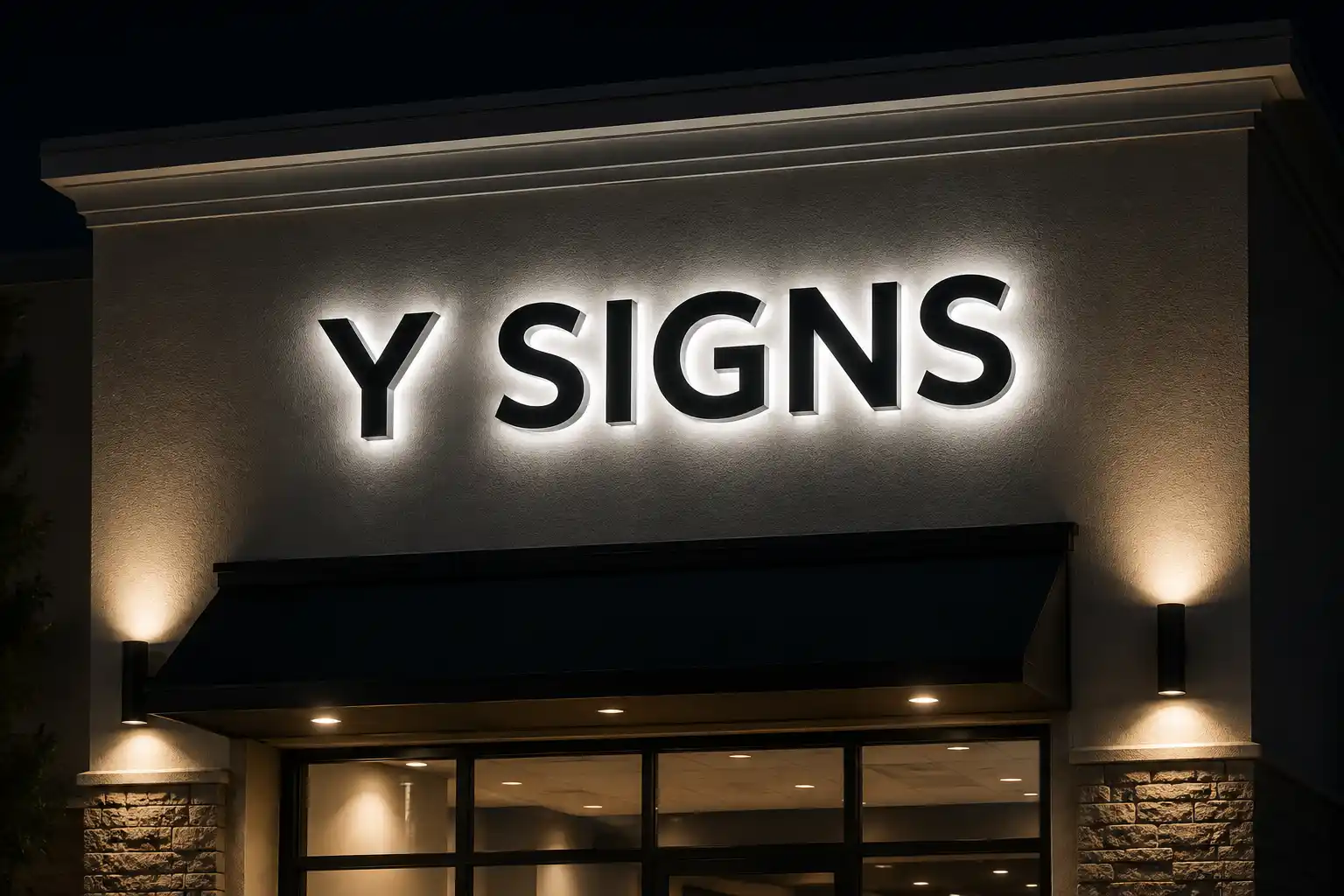
- Dark rough brick absorbs halo light; light smooth walls reflect it.
- Mounting hardware shifts by substrate: masonry anchors for brick, studs through stucco, adhesive or standoffs on glass.
- Every exterior install needs waterproofing and flashing against the wall.
- Glass storefronts give the most dramatic, mirror-like halo.
Why the Wall Surface Changes a Backlit Sign
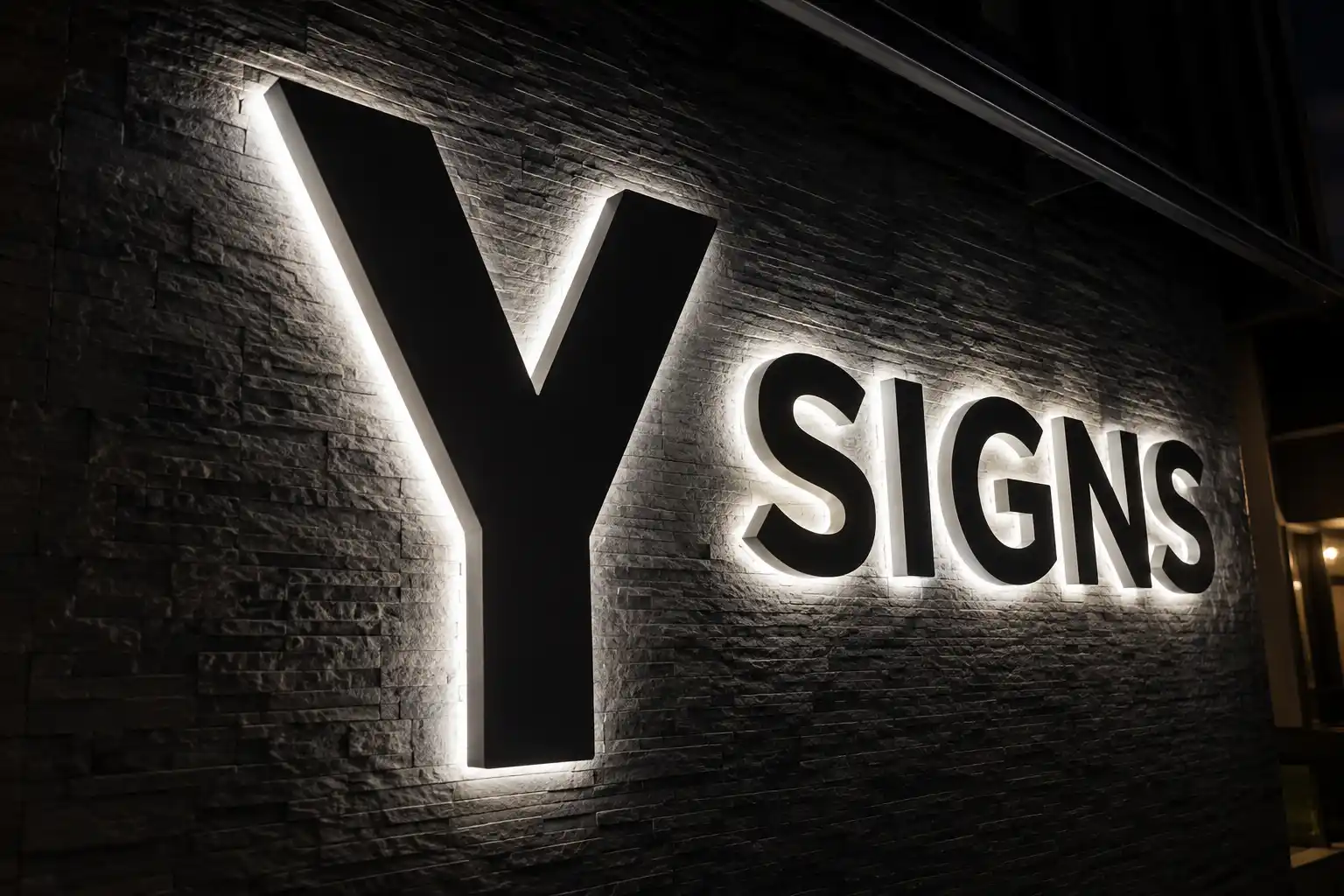
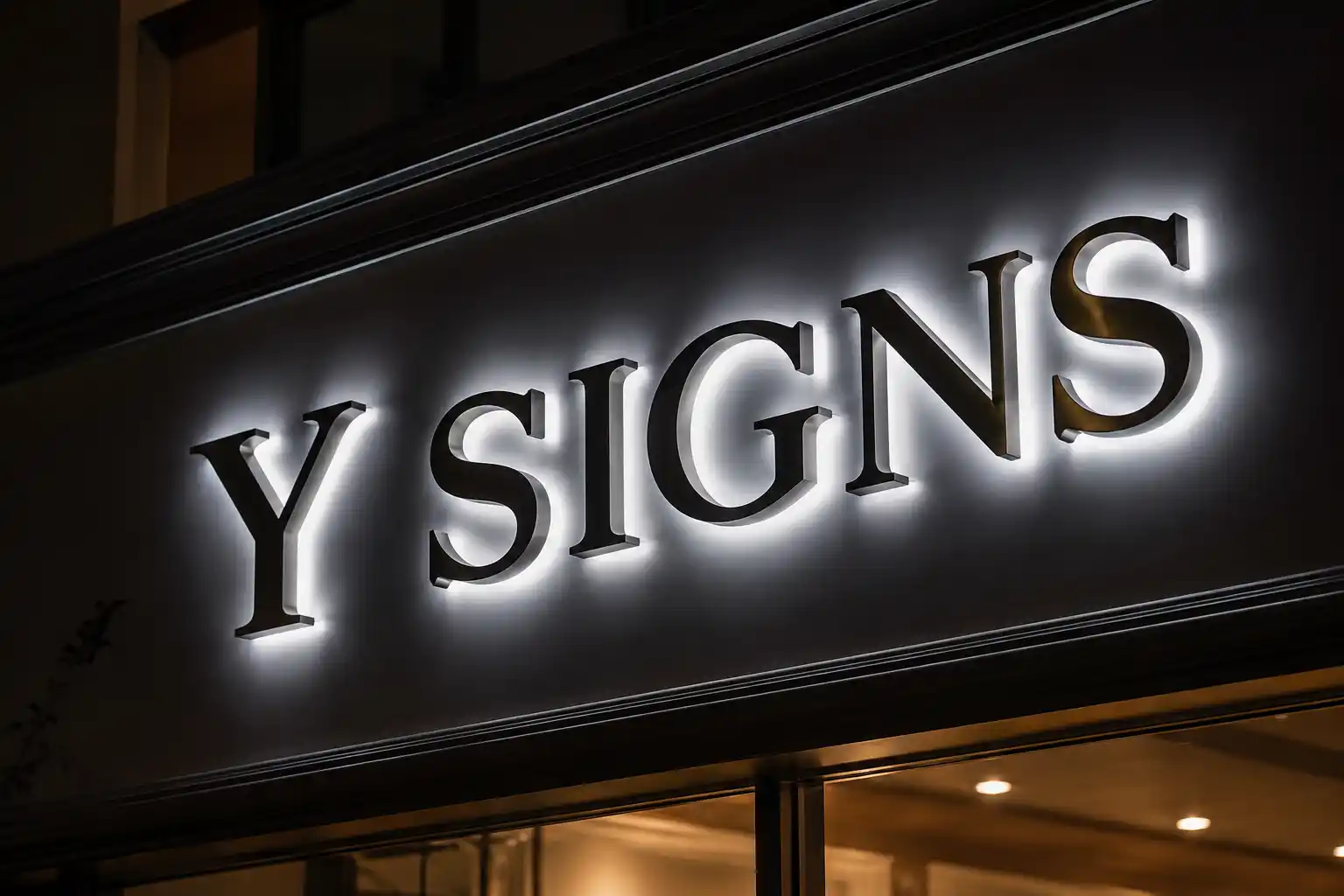
A halo-lit channel letter emits light from behind and around each opaque letter, so the wall is the backdrop and the reflector of the glow. On a light, smooth surface, the halo bounces back at full intensity; on a dark, rough, or porous one, the texture absorbs it. This is the core difference between backlit letters on brick vs stucco vs glass.
Reflection vs absorption on each surface
- Brick: Red and brown tones plus deep mortar joints soak up a lot of warm light — a softer, earthier halo, still attractive but less of a “glowing ring.”
- Stucco and plaster: A light finish reflects the halo well; a medium sand texture spreads it slightly into a soft, diffused ring.
- Smooth painted and metal/siding: Light-to-white surfaces reflect nearly all the halo and give the cleanest, most defined ring.
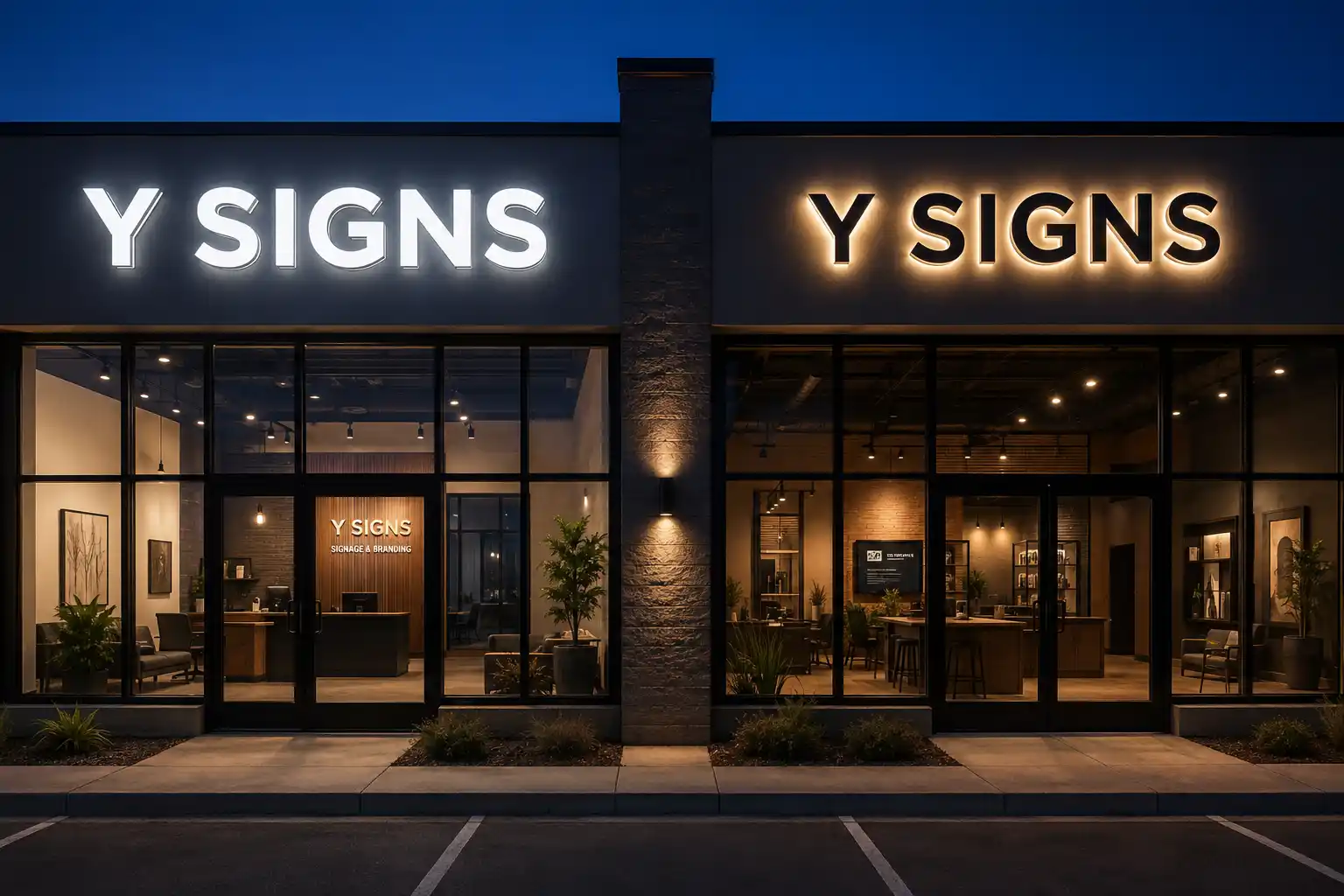
- Glass storefront: Reflects the halo back toward the viewer and can double the visible brightness for the most dramatic, crisp night look.
Mounting Hardware by Substrate
Where mounting differs most is behind the wall — choose hardware rated for the actual construction, never the front surface alone.
Through-bolts and masonry anchors on brick
Brick needs masonry or wedge anchors driven into the bricks (or the structural block behind). Drilling into brick core is fine; drilling too close to a mortar joint risks cracking. Because brick is porous, this is the install where flashing and a good sealant matter most.
Studs through stucco and plaster
Stucco’s real strength is in the wood or metal studs underneath. Use concealed standoffs on studs or standoffs bedded in an epoxy base. Stucco chips easily at drill points, so the hole must be sealed before the standoff goes in to stop water wicking behind the finish.
Structural adhesive and standoffs on glass and metal
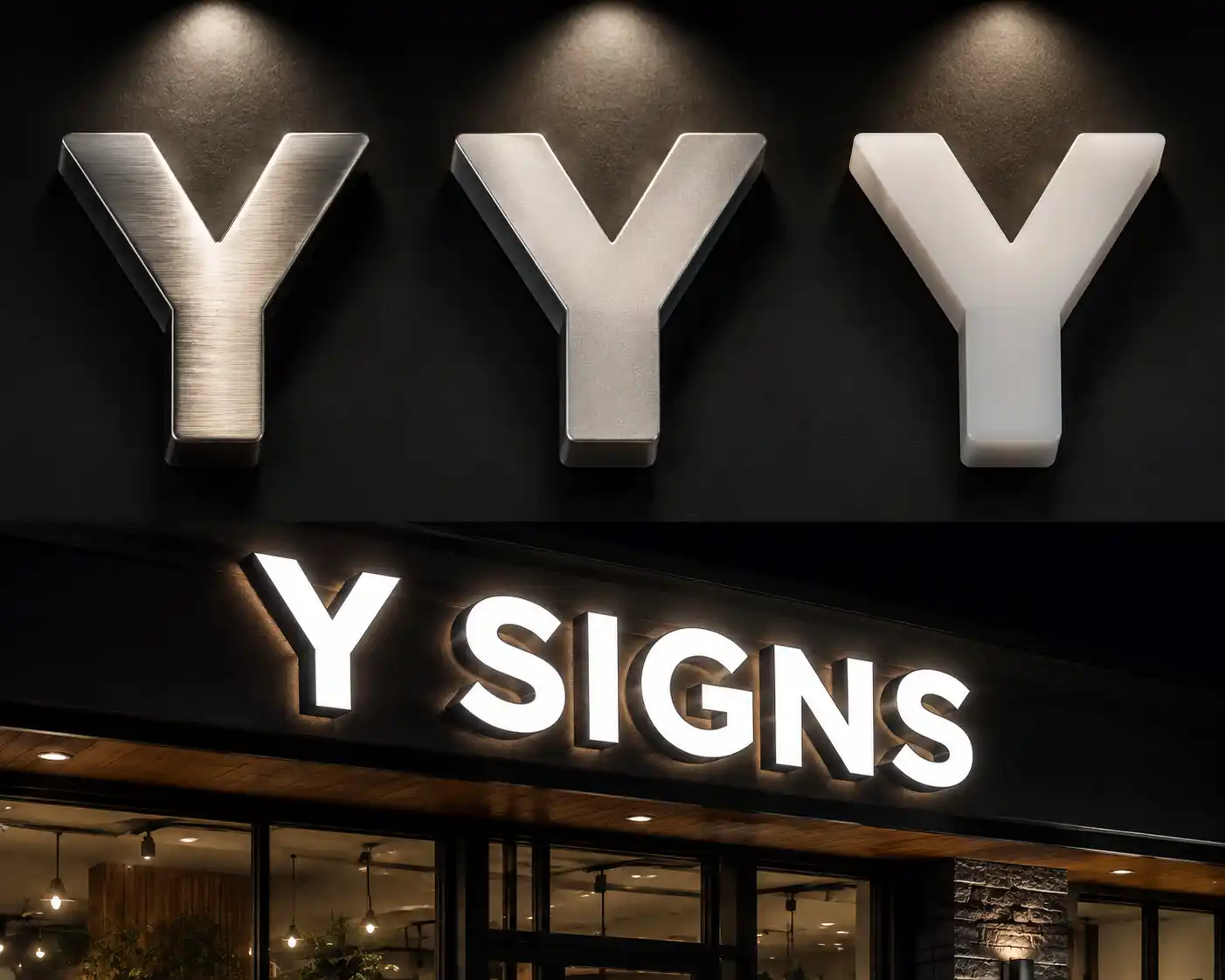
Glass storefronts mount with standoffs/studs fixed through the frame, or with approved structural adhesive where drilling is not allowed. Metal siding and heavy panels take machine screws into the substrate behind them.
Waterproofing and Flashing Against the Wall
Every exterior backlit letter needs a water barrier where metal meets the wall. On brick and stucco this is non-negotiable: use drip-edge flashing above the letters, backer rod plus silicone at every fastener, and let the bottom edge drain condensation rather than pool. On glass, use compressive gaskets rather than rigid sealant so the glass can expand and contract without stressing the letters. Compare how mounting changes the install in our backlit channel letter buying guide.
Letter Throw and Halo Drama
Letter throw is how far the letter face stands off the wall — more reads as a bigger, softer halo.
- Short throw (0.5–1 in): Tight halo, good on smooth, light, reflective surfaces.
- Medium throw (1–1.5 in): Balanced halo — the right default for stucco and painted walls.
- Long throw (1.5–2.5 in): Big, soft halo that spreads across rough or dark surfaces like brick.
On brick, a longer throw compensates for absorbed light. On glass, a moderate throw is plenty because the glass reflects the halo back. Combine wall material with backlit acrylic and material choice — see our halo lit letters materials guide before you finalize.
Comparison Table: Backlit Letters on Brick vs Stucco vs Glass
| Wall Surface | Halo Reflection | Mounting Hardware | Waterproofing | Recommended Throw | Halo Drama (Night) |
|---|---|---|---|---|---|
| Brick | Low — texture absorbs warm light | Masonry/wedge anchors, through-bolts | Drip flashing + full sealant (porous) | Long (1.5–2.5 in) | Soft, earthy, understated |
| Stucco / plaster | Medium-high on light finishes | Standoffs on studs; epoxy base | Backer rod + silicone at every stud | Medium (1–1.5 in) | Soft diffused ring |
| Smooth painted | High — clean reflection | Standard standoffs/studs | Standard silicone seal | Short–medium (0.5–1.5 in) | Crisp, defined |
| Metal / siding | High on light panels | Machine screws into substrate | Compressive gaskets, weep holes | Short–medium (0.5–1.5 in) | Clean and sharp |
| Glass storefront | Very high — reflective bounce-back | Frame standoffs OR structural adhesive | Compressive gaskets (no rigid seal) | Medium (1–1.5 in) | Most dramatic, mirror-like |
Which Wall Gives the Best Backlit Look?
There is no single “best” wall. For the most dramatic halo, a glass storefront or a light smooth-painted wall delivers the brightest, most defined night look because the surface reflects the glow back. Brick gives a warmer, more understated, architectural halo — outstanding on a heritage facade, but it needs a longer throw and careful waterproofing. Stucco is the reliable middle ground. If you want front and back glow on any surface, a Front and Back-Lit Sign keeps the halo while adding readable face illumination.
Light tone matters too — cool white reads crisper on dark brick, warm white suits light stucco; see the light and color guidance in our backlit channel letter buying guide.
FAQ
Can backlit letters be mounted on brick without damaging it?
Yes. Halo-lit letters on a brick wall mount with masonry anchors and through-bolts that bite into the brick or the structural block behind it. Drilling is required, but with proper flashing and sealant the holes stay watertight and the brick is not weakened.
Do backlit letters look as bright on glass as on a painted wall?
Usually brighter. Glass reflects the halo back toward the viewer, so a storefront letter can look dramatically more defined at night than on a light-painted wall — more visible glow for the same LED output.
Which wall is easiest to install backlit letters on?
A smooth flat wall — smooth painted block or a wood-stucco stud wall — is fastest and least risky to mount. Brick and glass both work but demand specific hardware and the most care with waterproofing and adhesion.
Start Your Backlit Sign Project
Tell Y SIGNS your surface, storefront, and finish, and we will engineer the right letter throw, mount, and waterproofing for the wall you have. Get a free quote here or upload your logo, and get factory-direct backlit letters installed and glowing. See the full range in our backlit channel letters buying guide, and weigh backlit vs face lit channel letters if you are deciding between the two.