The DIY Option: What You Can (and Can’t) Do Yourself
When it comes to storefront signage, the DIY route is tempting. A few hundred dollars and a weekend of work can get you a sign on your door — but the scope of what you can realistically accomplish yourself is narrower than most business owners expect.
What you CAN do yourself: Vinyl decals are the most DIY-friendly option. With a vinyl cutter (or even pre-cut letters from a supplier), you can apply lettering directly to your door or window in an afternoon. Basic LED neon signs — the flexible acrylic type that comes pre-formed — can also be installed by a reasonably handy person. These are often sold as kits with mounting hardware and simple instructions.
What you CAN’T do yourself: Custom-bent neon signs require specialized glass-bending equipment and years of practice — this is not a garage project. Channel letters (the three-dimensional hollow letters backlit with LED that you see on most retail facades) demand precise fabrication, weatherproofing, and commercial-grade electrical work. Large-format signs over 6 feet wide need engineered mounting systems and often require permits and structural load calculations. Attempting any of these without professional help is a safety risk and typically results in a sign that looks amateurish or fails within months.
The honest rule of thumb: if your sign needs to withstand weather, attach to masonry, or comply with local zoning codes, you should probably hire a professional.
Cost Comparison: DIY vs Professional
Pricing varies by region and sign complexity, but here is a realistic breakdown of what you can expect to pay:
| Sign Type | DIY Cost | Pro Cost | DIY Difficulty |
|---|---|---|---|
| Simple LED neon (2ft) | $50–150 | $150–400 | Medium |
| Custom letter sign (3ft) | $100–300 | $400–1200 | Hard |
| Channel letters | Not feasible | $1500–4000 | Impossible |
| Large storefront (6ft+) | Not feasible | $2000–8000 | Impossible |
As the table shows, the DIY savings are most significant for small, simple signs. Once you cross into channel letters or large-format signage, professional fabrication is your only realistic option.
Quality Comparison: Can You Tell the Difference?
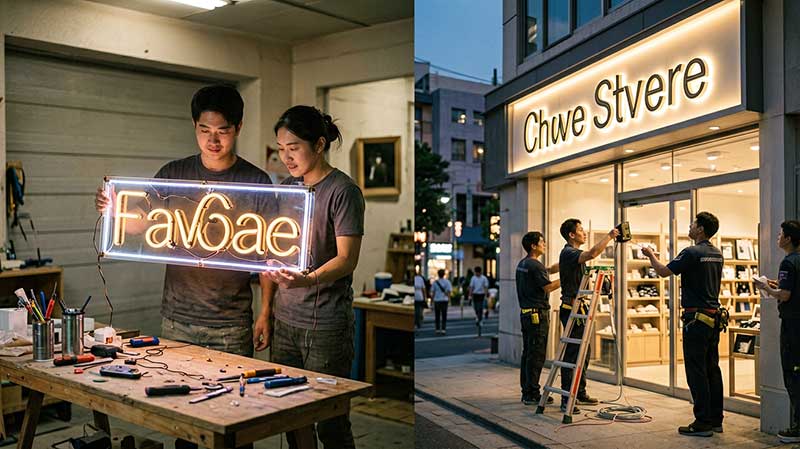
Let’s be honest: yes, you can usually tell. Professional sign shops use industrial-grade materials — high-density urethane (HDU), aluminum composite panels, commercial LEDs rated for 50,000+ hours, and UV-resistant vinyl that won’t fade after one summer. DIY materials are typically consumer-grade: flexible plastic, lower-lumen LEDs, and vinyl that may start peeling at the edges within six months.
The visual difference is equally noticeable. Professional signs have crisp edges, even illumination, perfectly spaced lettering, and seamless mounting. DIY signs often show visible seams, uneven brightness, and less precise alignment. For a pop-up shop or short-term lease, this may not matter. For a permanent storefront that represents your brand every day, the quality gap matters.
That said, a well-executed DIY vinyl decal on clean glass can look perfectly professional. The key is knowing which sign types leave room for error and which do not.
Time Investment: How Many Hours Will It Take?
Time is the hidden cost of DIY signage. Building a 2–3 foot LED neon sign from a kit might take 10 hours spread over a weekend — design, assembly, troubleshooting, and installation. A more complex custom letter sign can consume 40 hours across several weekends, especially if you have to redo sections after mistakes.
Professional sign shops, by contrast, handle everything in 3 to 14 days from design approval to installation. You spend exactly zero hours of your own labor. For a busy business owner, that time saving often justifies the higher cost — especially during a launch or renovation when every hour counts.
If your time is worth more than roughly $30 per hour (and for most business owners it is), the professional option may actually be cheaper when you factor in your own labor.
When DIY Makes Sense (And When It’s a Mistake)
Three scenarios where DIY works:
1. Temporary signage. A short-term pop-up, market stall, or seasonal display doesn’t justify the expense of a permanent sign. Use vinyl decals or a small LED sign you can take with you.
2. Interior wayfinding. Small directional signs inside your space — restroom signs, department labels, opening hours — are well within DIY capability and cost almost nothing compared to custom fabrication.
3. Budget under $300. If you only have a few hundred dollars to spend, DIY is your only path to having any sign at all. A clean vinyl application with thoughtful design can look respectable.
Three scenarios where you MUST go professional:
1. Permanent exterior signage. Outdoor signs face sun, rain, wind, and temperature swings. Only professional-grade materials and installation will survive more than a year.
2. Code and permit requirements. Most municipalities require permits for exterior signage over a certain size. Professional sign companies handle permitting — and they ensure your sign meets safety codes. A DIY sign that fails inspection can cost more in fines and rework than hiring a pro from the start.
3. Brand-critical first impressions. If your storefront is in a competitive area or high-traffic location, the difference between a polished pro sign and a rough DIY look directly affects foot traffic and customer perception.
The Middle Ground: Design Yourself, Let Pros Build
There is a hybrid approach that saves money without sacrificing quality: design your sign yourself and hire a professional fabricator to build it. Many sign shops will work from your mockup or Adobe Illustrator file, charging only for fabrication and installation. You get professional-grade materials and workmanship with a design that reflects your vision.
This approach works especially well for custom letter signs and smaller LED neon signs. You can iterate on the design at your own pace (zero hourly cost) and then hand off a finished file for production. Just make sure your design file uses the correct dimensions, font licensing, and color specifications the fabricator requires.
Browse our gallery for inspiration, or contact us to discuss your project. If you are still deciding between sign types, read our neon sign installation guide for more details on what each option involves.
More Storefront Sign Resources
Still deciding? Check out our outdoor durability guide if your sign will face the elements, or learn where to order custom signs that match your budget. Already have a sign? Read our maintenance guide to keep it running.