From $19.9

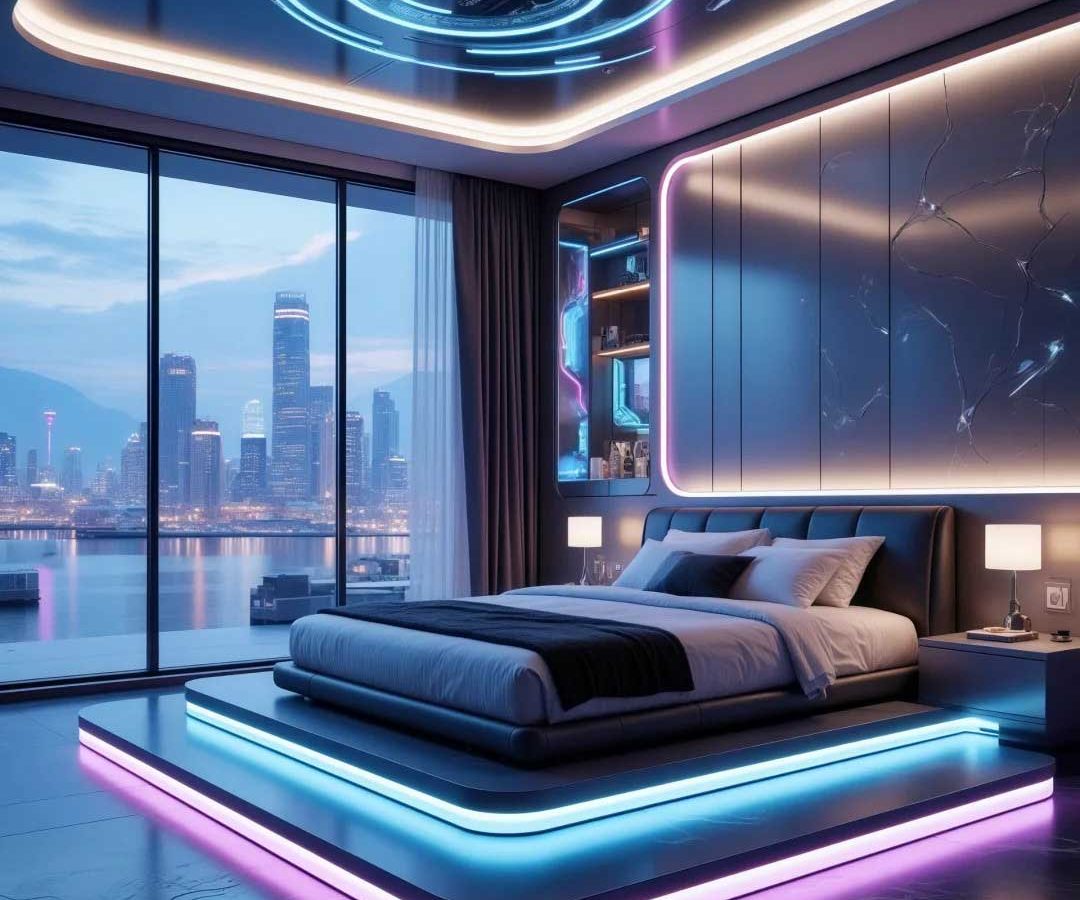
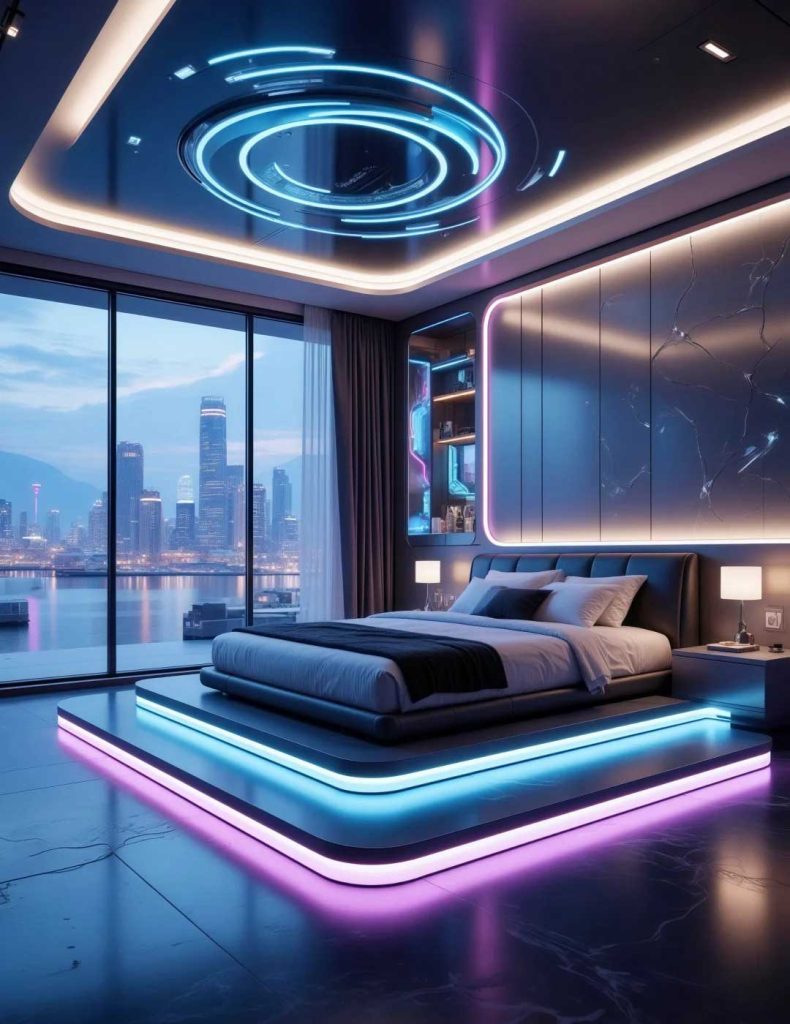
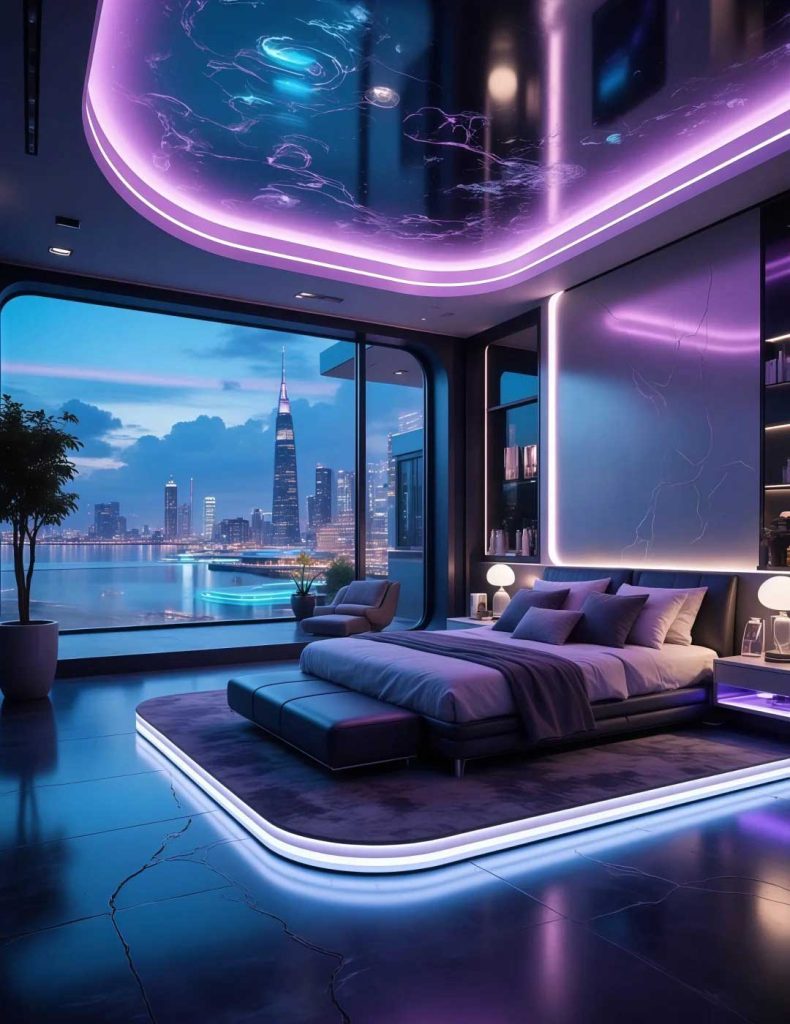
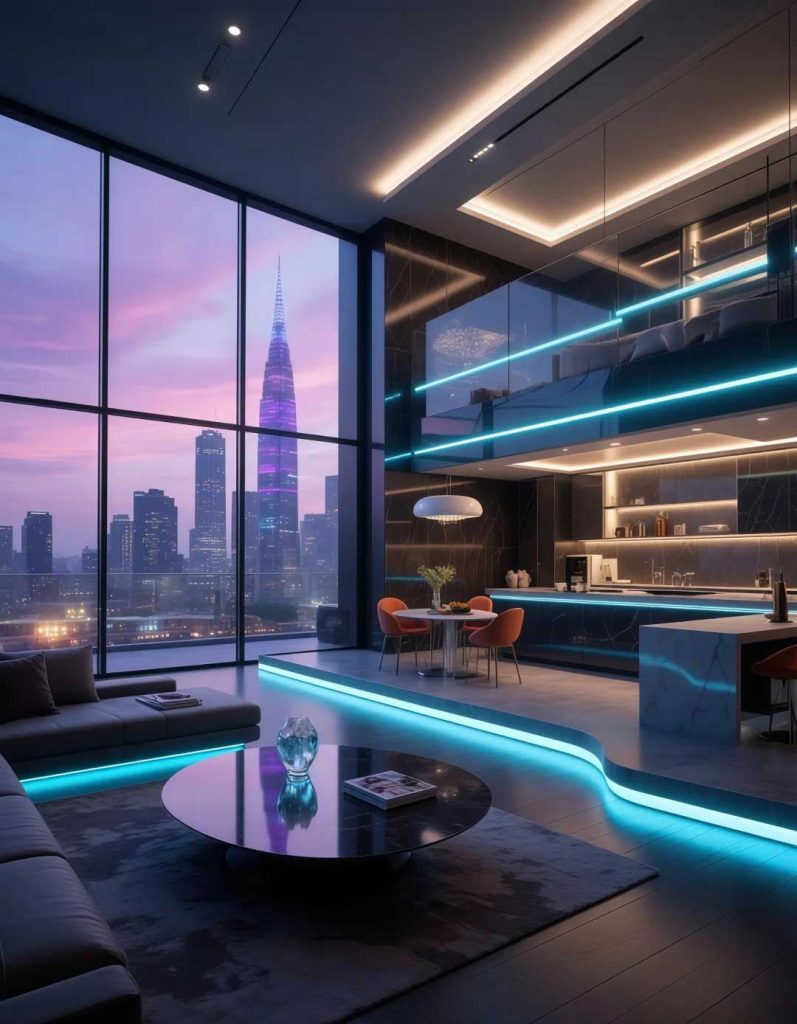
Neon-drenched shadows, exposed ducts, holographic glows flickering against raw concrete walls — this is not your average cozy nest. A cyberpunk home blurs the line between living space and sci-fi set, where industrial grit meets high-tech sheen in a visual collision that feels both dystopian and exhilarating. The concept challenges the very notion of what a home should be, rejecting soft carpets and warm wood tones in favor of cold steel, glass, and programmable light.
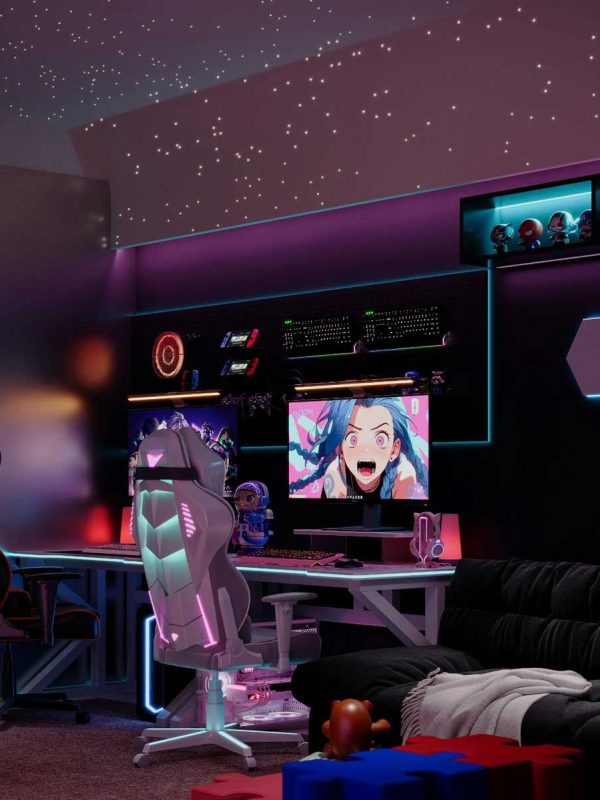
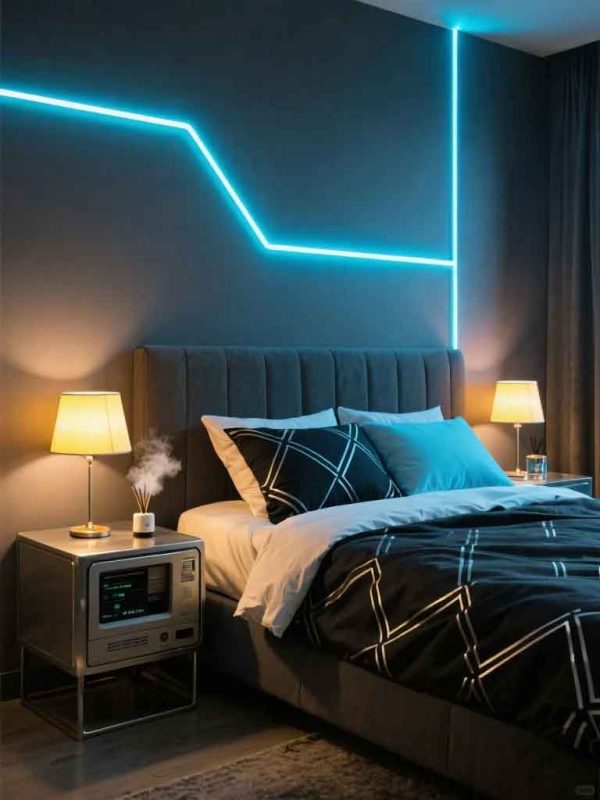
The design language draws heavily from the cyberpunk genre’s visual canon — the rain-slicked neo-Tokyo alleyways of Blade Runner, the brutalist megastructures of Ghost in the Shell, and the neon-saturated nightlife of Hong Kong’s Kowloon Walled City. But rather than replicating these references literally, the design translates their essence into livable spaces. RGB-lit corridors guide movement through the home like glowing arteries, while metallic finishes on cabinetry and furniture reflect and scatter colored light, creating an ever-changing atmosphere that shifts with the time of day and the occupant’s mood. The dual-tone geometric styling adds structure to what could otherwise be visual chaos, with sharp angular lines and repeating patterns providing a disciplined framework for the riot of color and texture.
The material palette for a cyberpunk home is deliberately confrontational. Raw concrete walls are left exposed and sealed with a clear matte finish that preserves their industrial texture while preventing dust infiltration. Exposed ductwork is painted in dark charcoal or matte black, with linear LED strips running along their length to transform utilitarian infrastructure into a deliberate aesthetic feature. Metallic surfaces — brushed stainless steel, anodized aluminum, and powder-coated blackened steel — dominate the furniture and architectural details, each chosen for its ability to interact dynamically with colored light.
Smart glass features prominently in the cyberpunk home, installed in interior partitions and window systems that can shift from transparent to frosted with the flip of a switch. This technology serves both practical and aesthetic purposes: by day, it allows natural light to permeate the space; by night, it becomes a canvas for projected imagery or layered backlighting. Holographic glows are achieved through a combination of recessed LED panels with programmable color arrays and translucent acrylic diffusers that create the illusion of floating, three-dimensional light forms. Oversized digital displays embedded into key surfaces — kitchen backsplashes, hallway walls, even ceiling panels — can cycle through digital art, ambient animations, or functional data displays, reinforcing the cyberpunk theme of living within a networked, data-rich environment.
Bringing a cyberpunk aesthetic into a residential setting requires careful coordination between traditional construction trades and specialty technology integrators. The electrical load alone demands careful planning — RGB lighting, smart glass, digital displays, and control systems can draw significant power, requiring dedicated circuits and often a secondary sub-panel. All lighting is routed through a centralized DMX or DALI control system that allows individual fixtures, color zones, and scenes to be programmed and recalled from a single interface.
The exposed ductwork and concrete finishes require a full structural assessment before installation begins. What appears to be a raw, unfinished look is in fact the result of meticulous craftsmanship — concrete must be poured and cured with precision to avoid cracks that would read as defects rather than character, and exposed ducts must be acoustically lined to prevent the HVAC system from sounding like a wind tunnel. Smart glass installations involve running low-voltage wiring through wall cavities to each panel, with transformers and controllers hidden in accessible but unobtrusive locations. The oversized digital displays are typically custom-fabricated to fit precisely within cabinetry or wall cutouts, with ventilation channels to manage heat dissipation and calibration routines to ensure color consistency across multiple panels.
It is moody, futuristic, and unapologetically bold — definitely not for everyone. But for those who dream of rain-slicked cityscapes, nocturnal energy, and living inside a video game aesthetic, this might just be their ultimate sanctuary. The cyberpunk home has polarized viewers since its debut, generating some of the most passionate responses in the Y Design Guide gallery. Critics argue it sacrifices comfort for spectacle, while advocates counter that it redefines what comfort can mean — finding warmth not in traditional textures but in the glow of neon and the hum of technology.
What is undeniable is the impact it has had on residential design discourse. Elements of the cyberpunk home — statement neon lighting, exposed structural finishes, programmable color environments — have begun appearing in more mainstream projects, diluted and domesticated but clearly descended from this bold experiment. For the homeowners who embrace the full vision, the payoff is a living space that feels alive, responsive, and utterly unique — a home that doesn’t just shelter you but immerses you in an alternate reality every time you walk through the door.
Interested in a custom storefront sign design? Contact Y Design Guide for a free consultation.